
Is a radar detector illegal in Houston Texas? This question concerns thousands of Houston drivers considering these devices for their vehicles. The short answer is no – radar detectors are legal for private passenger vehicles in Houston and throughout Texas. However, important exceptions, restrictions, and practical considerations exist that every driver should know before purchasing and using these devices.
This comprehensive guide explains Texas radar detector laws, federal regulations, specific Houston considerations, and the legal boundaries governing these popular automotive accessories.
Also Read: 8 Best Places to Retire in Texas
Texas State Law on Radar Detectors
Texas takes a permissive stance on radar detector use compared to some other states. State law explicitly allows private citizens to use radar detection devices in their personal vehicles without restriction.
Key Legal Points:
- Radar detectors are completely legal for private passenger vehicles
- No state law prohibits their purchase, possession, or use
- Texas does not require registration or permits for these devices
- Law enforcement cannot cite drivers solely for radar detector possession
- No age restrictions exist on radar detector ownership or use
Texas Transportation Code does not classify radar detectors as illegal equipment or prohibited devices. This places Texas among the majority of states permitting their use.
Is a Radar Detector Illegal in Houston Texas?
Texas traffic laws regulate vehicle equipment at the state level. Cities like Houston enforce these laws but do not create separate bans on radar detectors for private vehicles.
Legal Status in Texas
Radar detectors are legal for passenger vehicles across Texas, including Houston. State law does not prohibit drivers from owning or using radar detectors in personal cars.
Historical Context of Texas Radar Detector Laws
Texas has consistently maintained permissive radar detector policies since these devices became commercially available in the 1970s. Multiple legislative sessions have considered restrictions but consistently rejected broad prohibitions.
The state philosophy emphasizes personal freedom and limited government intervention in vehicle equipment choices. This approach extends to radar detectors, laser jammers (with distinctions), and similar technology.
Legislative Attempts at Restriction:
Several bills introduced in Texas Legislature over past decades attempted radar detector restrictions. These proposals focused on commercial vehicles, specific violation types, or enhanced penalties for speeders using detectors. None gained sufficient support for passage into law.
Federal Regulations Affecting Houston Drivers
While Texas state law permits radar detectors, federal regulations create important exceptions that apply in Houston and statewide.
Commercial Vehicle Restrictions
Federal Motor Carrier Safety Administration (FMCSA) regulations prohibit radar detectors in commercial motor vehicles exceeding 10,000 pounds gross vehicle weight.
Commercial Vehicle Definition:
- Vehicles with gross weight rating over 10,000 lbs
- Vehicles transporting hazardous materials requiring placards
- Vehicles designed to transport 16+ passengers including driver
- Any vehicle used in interstate commerce meeting weight thresholds
Penalties for Commercial Violations:
- Driver citation with fines up to $1,000
- Vehicle placed out of service until detector removed
- Points against commercial driver’s license
- Carrier safety rating impacts
- Increased insurance costs
Houston commercial drivers must comply with federal restrictions regardless of Texas state permissiveness. Interstate truckers passing through Houston face identical rules.
Military Base Restrictions
Military installations in Houston area including Ellington Field Joint Reserve Base prohibit radar detectors on base property.
Military Installation Rules:
- Complete ban on radar detectors while on military property
- Applies to civilian vehicles entering bases
- Installation commanders authorize enforcement
- Violations may result in base access restrictions
- Security personnel conduct vehicle inspections
Civilians working on or visiting military bases in Houston must remove or disable radar detectors before entering. This includes Ellington Field and any other Department of Defense properties in the Houston metropolitan area.
Radar Detectors vs. Laser Jammers: Critical Distinction
Many Houston drivers confuse radar detectors with laser jammers. These devices have completely different legal status under Texas law.
Radar Detector Legal Status
Fully Legal Devices:
Radar detectors passively receive radio frequency signals. They detect radar guns used by law enforcement without transmitting any signals. This passive operation keeps them legal under both state and federal law.
How Radar Detectors Work:
- Receive radio frequency emissions from police radar
- Alert driver to presence of radar signals
- No transmission or interference with police equipment
- Simple warning system without countermeasures
The passive nature prevents radar detectors from interfering with law enforcement operations. Courts consistently rule this passive reception falls within legal bounds.
Laser Jammer Illegal Status
Prohibited in Texas:
Laser jammers actively transmit signals interfering with police laser speed detection equipment. Texas law prohibits these active countermeasures.
Legal Prohibitions:
- Texas Transportation Code Section 547.613 prohibits interference devices
- Laser jammers classified as illegal countermeasure equipment
- Installation, possession, and use all prohibited
- Criminal penalties for violations
- Federal Communications Act also restricts jamming devices
Penalties for Laser Jammer Use:
- Class B misdemeanor charges in Texas
- Fines up to $2,000
- Up to 180 days jail time
- FCC fines reaching $11,000+ for interference violations
- Equipment seizure and destruction
Houston drivers must clearly distinguish between legal radar detectors and illegal laser jammers. Many modern devices combine both functions – the laser jamming component remains illegal even if the radar detection function is legal.
Radar Detector Laws in Surrounding States
Houston drivers frequently travel to neighboring states. Radar detector legality changes at state borders creating potential legal issues for Texas drivers.
Louisiana Restrictions
Louisiana prohibits radar detectors in commercial vehicles similar to federal law but permits them in private passenger vehicles. However, mounting restrictions apply – devices cannot obstruct driver visibility.
Oklahoma Regulations
Oklahoma allows radar detectors in private passenger vehicles without restriction. Commercial vehicle restrictions mirror federal regulations.
New Mexico Rules
New Mexico permits radar detectors in all private passenger vehicles. Commercial vehicle restrictions follow federal guidelines.
Arkansas Standards
Arkansas allows radar detectors with no state-level restrictions beyond federal commercial vehicle rules.
Interstate Travel Considerations:
Houston drivers traveling beyond immediate neighboring states should research destination state laws. Virginia and Washington DC completely prohibit radar detectors in all vehicles. California and Minnesota have specific restrictions for commercial vehicles exceeding federal standards.
Houston-Specific Considerations
Houston’s unique traffic enforcement environment creates specific considerations for radar detector users beyond basic legality questions.
Houston Police Department Practices
Houston Police Department uses various speed enforcement technologies across the city. HPD employs radar, laser (LIDAR), and pacing methods for speed detection.
Common Enforcement Locations:
- Major highways: I-45, I-10, I-610, Beltway 8
- School zones with automated enforcement
- Construction zones with enhanced penalties
- Residential areas with speeding complaints
- Known accident-prone intersections
HPD motorcycle units frequently use handheld laser devices less detectable by radar detectors. Fixed speed cameras in school zones don’t trigger radar detector alerts.
Harris County Sheriff’s Office Tactics
Harris County Sheriff’s Office patrols unincorporated areas and major thoroughfares in greater Houston region. Their speed enforcement combines traditional radar with aircraft speed detection.
Aircraft Speed Enforcement:
HCSO occasionally deploys aircraft for highway speed monitoring. Planes measure vehicle speeds between marked road segments then radio ground units for traffic stops. Radar detectors provide no warning for aircraft enforcement.
City of Houston Traffic Cameras
Houston operates red light cameras and school zone speed cameras at various locations. These automated systems don’t use radar technology detectable by consumer radar detectors.
Automated Enforcement Characteristics:
- Fixed camera locations at intersections and school zones
- Flash photography captures violations
- No radar or laser emissions
- Radar detectors ineffective for warning
- Citations mailed to registered vehicle owners
Radar detector users cannot rely on their devices for protection against Houston’s automated enforcement systems.
Practical Effectiveness in Houston
Legal status aside, radar detector effectiveness in Houston presents mixed results due to enforcement technology diversity and urban environment challenges.
Factors Affecting Detection Range
Urban Interference:
Houston’s dense urban environment creates multiple challenges for radar detector effectiveness:
- Building reflection causing false alerts
- Automatic door openers triggering detectors
- Other vehicles with radar-equipped safety systems
- Traffic monitoring systems creating background noise
- Reduced line-of-sight limiting advance warning
Weather Impacts:
Houston’s frequent rain and humidity affect radar and laser propagation. Heavy rain can reduce both police radar effectiveness and detector range. However, this works both ways – reducing police accuracy while also limiting detector advance warning.
Modern Police Technology Challenges
Instant-On Radar:
Many Houston area law enforcement agencies use instant-on radar that remains off until targeting specific vehicles. This gives radar detectors minimal warning time – often only when you’re already targeted.
Pop Radar Mode:
Newer police radar guns include “pop” mode firing extremely brief radar bursts. Many older radar detectors fail to detect these short signals providing no useful warning.
Laser Speed Detection:
LIDAR (laser) speed guns increasingly common in Houston provide instant speed readings with narrow targeting beams. Even detectors with laser warning capability rarely provide useful advance notice due to focused beam characteristics.
Legal Consequences of Speeding Despite Detector Use
Possessing a legal radar detector doesn’t protect Houston drivers from speeding consequences. Courts view detector use as irrelevant to speeding violations.
Standard Speeding Penalties
Houston Speeding Fine Structure:
| Violation Type | Fine Range | Additional Penalties |
|---|---|---|
| 1-5 mph over limit | $150-200 | Court costs $70-100 |
| 6-10 mph over limit | $175-250 | Potential defensive driving |
| 11-15 mph over limit | $200-300 | Points on license |
| 16-20 mph over limit | $250-400 | Insurance rate increase |
| 21+ mph over limit | $300-500+ | Reckless driving consideration |
Enhanced Penalties in Special Zones
School Zone Violations:
Texas law doubles fines for speeding in active school zones. Houston rigorously enforces school zone speed limits with both officers and automated cameras.
Construction Zone Penalties:
Active construction zones with workers present carry doubled fines. Houston’s constant construction creates numerous enhanced penalty zones across the city.
Aggressive Driving Charges:
Excessive speeding combined with other violations can trigger aggressive driving charges. These carry enhanced penalties including license suspension possibilities.
Purchasing and Installing Radar Detectors in Houston
Houston residents have numerous options for acquiring legal radar detectors. Local retailers, online vendors, and specialty shops all serve the market.
Local Houston Retailers
Major Electronics Stores:
Best Buy, Target, and similar retailers carry entry-level to mid-range radar detectors. These provide convenient purchasing with immediate availability.
Automotive Specialty Shops:
Several Houston businesses specialize in radar detectors, remote starters, and automotive electronics. These shops offer professional installation services and expert product knowledge.
Online Purchasing:
Major online retailers ship radar detectors to Houston addresses without restriction. This often provides widest selection and competitive pricing.
Installation Considerations
Windshield Mounting:
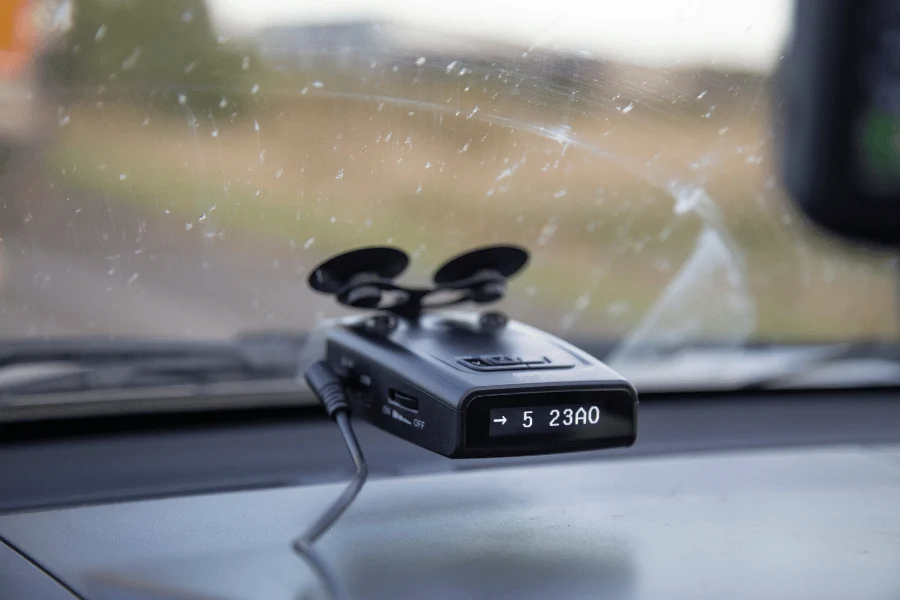
Most radar detectors use suction cup windshield mounts. Texas law permits windshield mounting provided devices don’t obstruct driver vision.
Texas Windshield Obstruction Law:
Texas Transportation Code Section 547.613 prohibits objects or materials obstructing driver view. Radar detectors mounted in driver’s direct sight line could potentially violate this statute despite detector legality.
Professional Installation Options:
- Hardwired systems with cleaner appearance
- Custom installations concealing display and controls
- Integration with vehicle power systems
- Remote display positioning
Professional installation typically costs $50-200 depending on complexity and desired features.
Alternatives and Complementary Technologies
Legal radar detectors represent just one approach to avoiding speeding tickets in Houston. Several alternatives and complementary strategies exist.
GPS-Based Speed Alert Systems
Modern navigation apps including Google Maps and Waze provide speed limit information and some speed trap warnings. These legal systems don’t detect radar but alert drivers to reported enforcement locations.
GPS System Advantages:
- Crowd-sourced police location reporting
- Speed limit change notifications
- Legal in all jurisdictions
- No additional hardware required
- Regular database updates
GPS System Limitations:
- Depends on user reports for accuracy
- No real-time radar detection
- Delayed information in fast-changing situations
- Requires smartphone and active connection
Cruise Control and Speed Limiting
Modern vehicles include adaptive cruise control maintaining set speeds. Some systems include speed limiting preventing excessive speeding.
Technology-Assisted Speed Compliance:
Using vehicle systems to maintain legal speeds eliminates speeding risk entirely. This approach proves more reliable than depending on detection and reaction time.
Defensive Driving Practices
Simply driving at or near posted speed limits provides absolute protection from speeding citations regardless of enforcement technology.
Safe Speed Strategies:
- Monitor speedometer regularly
- Allow extra travel time reducing speeding temptation
- Use right lanes when not passing
- Maintain traffic flow without exceeding limits
- Observe posted limit changes
Expert Legal Opinions on Houston Radar Detector Use
Texas traffic attorneys and legal experts consistently confirm radar detector legality while cautioning about practical limitations and related issues.
Attorney Perspectives
Houston traffic lawyers note radar detectors provide legal protection for device possession but zero protection against speeding violations. They emphasize detector legality doesn’t create any special defense for speeding charges.
Common Legal Advice:
Traffic attorneys recommend against purchasing radar detectors with laser jamming capabilities. The legal radar detection function doesn’t protect the illegal jamming component. Prosecutors aggressively pursue jamming device cases.
Law Enforcement Views
Houston area law enforcement officers express mixed opinions about radar detectors. Some view them as reasonable tools for speed awareness. Others consider them indicators of intentional speeding.
Practical Police Perspectives:
Officers note modern enforcement technology significantly reduces radar detector effectiveness. Instant-on radar, laser guns, and visual estimation diminish detector usefulness. Many officers report detector presence makes them more vigilant during traffic stops.
Future Legal Trends and Technology
Radar detector laws evolve slowly, but technology changes rapidly affecting enforcement and detection capabilities.
Emerging Enforcement Technologies
Automated Speed Enforcement Expansion:
Houston and Texas cities increasingly deploy automated enforcement cameras. These systems require no radar emissions providing nothing for detectors to sense.
Advanced Radar Technologies:
New police radar systems include features specifically designed to defeat detection devices. Frequency hopping, ultra-brief emissions, and other countermeasures reduce detector effectiveness.
Potential Legal Changes
Legislative Proposals:
Recent Texas legislative sessions have seen bills proposing enhanced penalties for speeders using radar detectors. These proposals haven’t gained traction but reflect ongoing debate about device legality.
Federal Regulation Evolution:
Federal authorities periodically review radar detector policies for commercial vehicles. Expanded restrictions could affect larger pickup trucks and SUVs if weight-based definitions change.
Conclusion: Making Informed Decisions About Radar Detectors
Is a radar detector illegal in Houston Texas? The clear answer remains no for private passenger vehicles. Houston residents can legally purchase, possess, and use radar detectors in their personal cars without violating state or local laws.
However, important caveats apply. Commercial vehicle operators cannot use radar detectors under federal law. Military base entry requires detector removal. Laser jamming devices remain illegal regardless of radar detection capability. Interstate travel may encounter different state laws.
Practical effectiveness in Houston’s urban environment proves limited. Modern enforcement technology including instant-on radar, laser guns, and automated cameras reduces detector utility. Dense traffic and building interference create frequent false alerts diminishing usefulness.
Legal possession provides no protection against speeding violations. Houston courts impose standard penalties regardless of detection equipment. Enhanced penalties in school and construction zones apply equally to detector users.
Houston drivers considering radar detectors should weigh legal status against practical limitations and enforcement realities. These devices remain legal tools but hardly guarantee protection from speeding tickets. Defensive driving practices and speed limit compliance provide more reliable protection than detection technology.
The answer to “is a radar detector illegal in Houston Texas” remains firmly no for private vehicles. Making informed decisions requires knowing both the legal status and practical limitations of these controversial devices in Houston’s complex traffic enforcement environment.







Leave a Comment