
Texas lawns face unique challenges from extreme heat, periodic drought, varied soil types, and diverse climate zones. Choosing the Best Grass Seed for Texas Lawns means matching the right grass variety to your region, sun exposure, maintenance needs, and intended lawn use.
This in-depth guide highlights top performing grass options suited for Texas conditions, helping homeowners create a healthy, resilient lawn that stands up to the Lone Star State’s demanding climate.
Also Read: Best Time to Plant Grass Seed in Texas for a Thick, Healthy Lawn
Texas Climate Zones and Grass Adaptation
Texas spans 268,000 square miles across multiple climate zones, from humid subtropical in the east to arid desert in the west. This diversity means no single grass type suits all Texas lawns.
Major Climate Divisions:
- Humid East Texas – High rainfall, moderate winters, intense summer humidity
- Central Texas Hill Country – Variable rainfall, limestone soils, hot summers
- North Texas – Cold winters, hot summers, transitional climate zone
- West Texas – Arid conditions, alkaline soils, extreme temperature swings
- South Texas – Mild winters, hot humid summers, longest growing season
- Coastal Zone – Salt exposure, high humidity, sandy soils, hurricanes
Each region demands different grass characteristics for optimal performance and appearance.
Bermuda Grass: The Texas Lawn Champion
Bermuda grass dominates Texas landscapes as the most widely planted warm-season turfgrass. This aggressive spreader tolerates heat, drought, and heavy traffic better than most alternatives.
Performance Characteristics:
- Heat tolerance rating: Excellent (thrives in 85-95°F)
- Drought resistance: Superior once established
- Traffic tolerance: Outstanding for play areas and sports
- Growth rate: Very fast with aggressive spreading
- Shade tolerance: Poor (needs 8+ hours direct sun)
- Maintenance level: Moderate to high
Ideal Growing Conditions:
Bermuda grass performs best in full sun locations with well-drained soils. The grass enters dormancy when temperatures drop below 50°F, turning brown during Texas winters.
Common Bermuda Varieties
Common Bermuda Grass: The most affordable option producing fine to medium texture blades. Establishes quickly from seed at 1-2 pounds per 1,000 square feet. Excellent heat and drought tolerance but requires frequent mowing during peak growth.
Improved Bermuda Varieties: Premium cultivars like Tifway 419, TifTuf, and Celebration offer finer texture, better color, and improved disease resistance. These typically require vegetative establishment through sod or plugs rather than seed.
Best Uses:
- High-traffic family yards with children and pets
- Sports fields and recreational areas
- Full sun locations across all Texas regions
- Budget-conscious homeowners seeking low water needs
- Large open areas requiring rapid establishment
Bermuda Grass Limitations:
Invasive growth requires edging along beds and sidewalks. Poor shade performance eliminates this choice for tree-covered lots. Dormancy period leaves brown lawns from November through March in most Texas areas.
Buffalo Grass: Native Texas Excellence
Buffalo grass evolved in Texas and Great Plains conditions, making it naturally adapted to state challenges. This native warm-season grass offers exceptional drought tolerance and low maintenance requirements.
Performance Profile:
- Heat tolerance: Excellent (native adaptation)
- Drought resistance: Outstanding (deepest roots of common grasses)
- Traffic tolerance: Good for moderate use
- Growth rate: Slow with less aggressive spreading
- Shade tolerance: Fair (tolerates light shade)
- Maintenance level: Very low
Establishment Considerations:
Buffalo grass establishes slowly from seed, requiring 60-90 days for initial coverage. Treated seed improves germination rates significantly. Seeding rates run 2-3 pounds per 1,000 square feet.
Buffalo Grass Advantages
Water Conservation: Buffalo grass survives on 25-30% less water than Bermuda grass once established. Deep root systems (6-8 feet) access moisture unavailable to other species. This makes Buffalo grass ideal for water-restricted areas and eco-conscious homeowners.
Low Maintenance Requirements: Slower growth means less mowing (every 2-3 weeks versus weekly). Lower fertilizer needs reduce costs and environmental impact. Minimal pest problems eliminate most pesticide requirements.
Natural Appearance: Fine-textured blades create soft, comfortable surface. Blue-green color provides attractive contrast. Natural short height (4-6 inches unmowed) suits prairie aesthetic preferences.
Best Applications:
- West and Central Texas water-conscious landscapes
- Low-maintenance vacation or secondary properties
- Rural and ranch-style homes embracing native landscaping
- Transition from traditional lawns to sustainable alternatives
- Areas with watering restrictions or high water costs
Buffalo Grass Drawbacks:
Slow establishment tests patience. Less traffic tolerance than Bermuda grass makes it poor choice for active play areas. Winter dormancy period extends longer than other warm-season grasses. Limited availability in some nurseries increases acquisition difficulty.
St. Augustine Grass: Shade Champion
St. Augustine grass excels in shaded conditions where Bermuda and Buffalo grass fail. This coarse-textured warm-season grass thrives in East and South Texas humidity.
Key Performance Metrics:
- Heat tolerance: Very good with adequate moisture
- Drought resistance: Moderate (higher water needs)
- Traffic tolerance: Moderate for normal family use
- Growth rate: Moderate with stoloniferous spreading
- Shade tolerance: Excellent (best among warm-season grasses)
- Maintenance level: Moderate
Establishment Methods:
St. Augustine establishes from sod or plugs rather than seed. Sod provides instant lawn while plugs space 6-12 inches apart and fill in over growing season.
St. Augustine Cultivars
Floratam: Most common variety offering good cold tolerance and chinch bug resistance. Performs well across coastal and South Texas. Requires full sun to light shade.
Palmetto: Improved cold tolerance extending range into Central Texas. Better shade performance than Floratam. Finer texture creates more attractive appearance.
Raleigh: Superior cold hardiness for North Texas applications. Moderate shade tolerance. Good disease resistance profile.
Seville: Finest texture among St. Augustine varieties. Excellent shade tolerance. Slower growth reduces mowing frequency.
Optimal Growing Locations:
- Shaded yards under tree canopies
- East Texas high-humidity regions
- Coastal areas with sandy soils
- Properties with irrigation systems
- Homeowners prioritizing appearance over drought tolerance
St. Augustine Challenges:
Higher water requirements increase costs during drought. Susceptibility to chinch bugs demands monitoring. Thatch buildup requires periodic dethatching. Poor cold tolerance limits northern range. Coarse texture feels rough underfoot compared to finer grasses.
Zoysia Grass: Premium Texture and Performance
Zoysia grass delivers dense, carpet-like lawns handling moderate shade and traffic. This warm-season grass establishes slowly but provides excellent long-term results.
Performance Ratings:
- Heat tolerance: Excellent across Texas zones
- Drought resistance: Good (better than St. Augustine)
- Traffic tolerance: Very good for family activities
- Growth rate: Slow establishment, dense mature growth
- Shade tolerance: Good (handles partial shade well)
- Maintenance level: Low to moderate
Establishment Timeline:
Zoysia requires 2-3 years for complete lawn coverage from plugs or sprigs. Seed establishment takes 14-21 days for germination but still requires extended time for full density. Patience during establishment rewards with superior mature lawns.
Zoysia Variety Options
Meyer Zoysia (Z-52): Cold-hardy selection performing well across Texas. Medium texture with good density. Reliable establishment and performance.
Emerald Zoysia: Finest texture creating luxurious feel. Excellent shade tolerance. Slower growth reduces mowing. Premium choice for high-end landscapes.
Palisades Zoysia: Faster establishment than other Zoysia varieties. Coarser texture than Emerald. Good traffic tolerance for active areas.
El Toro Zoysia: Rapid growth for Zoysia species. Good cold tolerance. Darker green color. Handles some shade.
Best Uses for Zoysia:
- Homeowners seeking premium lawn appearance
- Partial shade situations under tree canopy
- Low-maintenance landscapes requiring infrequent mowing
- Properties with moderate foot traffic
- Areas where fine texture and density matter most
Zoysia Limitations:
Slow establishment requires patience or expensive sod installation. Higher initial costs than Bermuda or Buffalo grass. Dethatching needs develop in mature lawns. Limited availability in some Texas regions increases acquisition challenges.
Tall Fescue: Cool-Season Option for North Texas
Tall fescue provides cool-season alternative for North Texas transition zone. This deep-rooted grass handles heat better than other cool-season species.
Performance Overview:
- Heat tolerance: Good for cool-season grass
- Drought resistance: Good due to deep roots
- Traffic tolerance: Very good for family use
- Growth rate: Moderate with bunch-type growth
- Shade tolerance: Excellent in cool seasons
- Maintenance level: Moderate to high
Texas Application:
Tall fescue suits North Texas locations where warm-season grasses struggle during cool periods. Year-round green appearance appeals to homeowners disliking winter dormancy. Performs best in northern third of state.
Tall Fescue Challenges in Texas
Summer Stress: Texas heat stresses tall fescue requiring extra watering and care. Disease pressure increases during hot, humid periods. Brown patch and other fungal diseases challenge establishment and maintenance.
Seeding Requirements: Tall fescue requires 6-8 pounds seed per 1,000 square feet. Annual overseeding maintains density as bunch-type growth creates gaps. Fall planting (September-October) proves critical for establishment before heat.
Best Applications:
- North Texas lawns north of Interstate 20
- Shaded areas remaining cool during summer
- Homeowners wanting year-round green lawns
- Properties with supplemental irrigation systems
- Areas where cool-season grass aesthetics preferred
Fescue Limitations:
Poor performance south of Dallas-Fort Worth area. Higher water and maintenance needs than warm-season alternatives. Annual renovation required maintaining density. Disease susceptibility increases costs and effort.
Ryegrass: Temporary Winter Color Solution
Ryegrass serves temporary purposes in Texas lawns rather than permanent establishment. This cool-season grass provides winter green when warm-season grasses enter dormancy.
Overseeding Applications:
Homeowners overseed dormant Bermuda or Buffalo grass with annual ryegrass in fall. This creates green winter lawns for aesthetic purposes. Ryegrass dies naturally when warm-season grass resumes growth in spring.
Overseeding Process:
- Scalp warm-season grass to 1/2 inch height
- Rake to expose soil surface
- Broadcast ryegrass seed at 5-7 pounds per 1,000 sq ft
- Water frequently until establishment
- Mow regularly maintaining 2-inch height
- Reduce overseeding rate in spring allowing warm-season recovery
Ryegrass Considerations:
Annual process increases maintenance time and cost. Ryegrass competes with warm-season grass during spring transition. Some homeowners accept dormant lawns avoiding overseeding expense and effort.
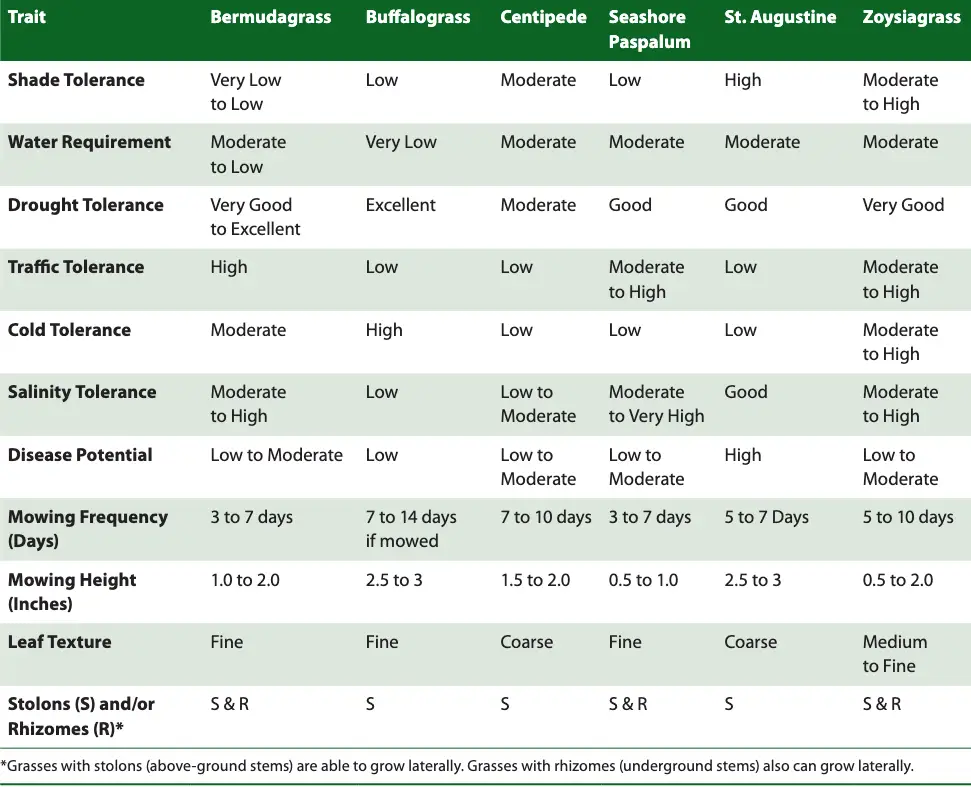
Best Grass Seed for Texas Lawns
| Grass Type | Heat Tolerance | Drought Resistance | Shade Tolerance | Traffic Tolerance | Maintenance Level | Best Region |
|---|---|---|---|---|---|---|
| Bermuda Grass | Excellent | Excellent | Poor | Excellent | Moderate-High | Statewide |
| Buffalo Grass | Excellent | Outstanding | Fair | Good | Very Low | Central/West |
| St. Augustine | Very Good | Moderate | Excellent | Moderate | Moderate | East/South |
| Zoysia Grass | Excellent | Good | Good | Very Good | Low-Moderate | Statewide |
| Tall Fescue | Good | Good | Excellent | Very Good | Moderate-High | North Texas |
| Ryegrass | Poor | Poor | Good | Good | High | Winter overseed |
Seed Quality and Selection Factors
Purchasing quality seed dramatically impacts establishment success and long-term lawn performance. Several factors separate premium from inferior seed products.
Seed Label Information
Germination Rate: Premium grass seed shows 85% or higher germination rates. This percentage indicates how many seeds successfully sprout under ideal conditions. Lower rates waste money on non-viable seed.
Purity Percentage: High-quality seed contains 95% or higher pure seed content. Remaining percentage includes inert matter, other crop seed, and weed seed. Higher purity means more desired grass per pound.
Weed Seed Content: Look for zero or near-zero weed seed listed on labels. Even small percentages introduce thousands of unwanted plants into new lawns. Avoid seed with noxious weed listings.
Testing Date: Recent test dates (within 9-12 months) ensure current accuracy. Old seed loses viability over time reducing germination rates. Check dates before purchase.
Seed Treatment Options
Coated Seed: Many Buffalo grass and some Bermuda seeds come with coatings improving germination rates. Treatments may include fungicides, nutrients, or moisture-retention compounds. Coated seed costs more but often delivers better results.
Untreated Seed: Basic seed without enhancements costs less. Suitable for large areas where some losses acceptable. Requires more attention during establishment ensuring success.
Blend vs. Single Variety:
Blends combine multiple cultivars providing genetic diversity. If one variety struggles with disease or stress, others compensate maintaining lawn quality. Single varieties create uniform appearance but lack diversity protection.
Regional Recommendations Across Texas
The best grass seed for Texas lawns varies significantly by region due to climate, soil, and rainfall differences.
North Texas (Dallas-Fort Worth-Amarillo)
Primary Recommendations:
- Bermuda grass for sun areas (common or improved varieties)
- Tall fescue for shade and year-round green preference
- Zoysia grass for premium lawns with patience for establishment
Regional Considerations: Cold winters limit some warm-season options. Transition zone status allows both warm and cool-season grasses. Clay soils common requiring amendments.
Central Texas (Austin-San Antonio-Waco)
Top Choices:
- Bermuda grass for most applications (widely adapted)
- Buffalo grass for water conservation (native advantage)
- St. Augustine in shade (south-central areas)
- Zoysia for premium landscapes
Area-Specific Factors: Limestone soils affect pH requiring testing. Variable rainfall demands drought-tolerant selections. Urban water restrictions favor low-water grasses.
East Texas (Houston-Beaumont-Tyler)
Best Performers:
- St. Augustine grass (primary choice for shade)
- Bermuda grass for sun areas
- Zoysia grass for quality lawns
Regional Challenges: High humidity increases disease pressure. Heavy rainfall during establishment. Acid soils may need lime applications. Shade from pine trees common.
West Texas (El Paso-Midland-Lubbock)
Optimal Varieties:
- Buffalo grass (natural drought tolerance)
- Bermuda grass with irrigation support
- Blue grama for minimal maintenance
Climate Considerations: Extreme aridity demands water-efficient choices. Alkaline soils may need sulfur amendments. Wind increases evapotranspiration rates. Temperature extremes stress less-adapted grasses.
South Texas (Corpus Christi-McAllen-Laredo)
Primary Selections:
- St. Augustine grass (humidity tolerant)
- Bermuda grass (heat performer)
- Zoysia grass (quality option)
Local Factors: Longest growing season statewide. Salt exposure near coast affects choices. Sandy coastal soils versus clay inland. Mild winters allow year-round growth.
Establishment Success Factors
Selecting the best grass seed for Texas lawns represents just the first step. Proper establishment techniques ensure seed selection translates into beautiful lawns.
Soil Preparation Requirements
Essential Steps:
- Test soil pH and nutrients before planting
- Amend soil based on test results and grass requirements
- Till or renovate compacted areas improving drainage
- Remove existing vegetation completely
- Create level grade eliminating low spots
- Firm seedbed with roller before seeding
Thorough preparation creates foundation for successful grass establishment. Shortcuts lead to poor results and wasted resources.
Seeding Rates by Species
Recommended Amounts per 1,000 Square Feet:
- Bermuda Grass: 1-2 pounds (common varieties)
- Buffalo Grass: 2-3 pounds (treated seed recommended)
- Zoysia Grass: 1-2 pounds (or vegetative establishment)
- Tall Fescue: 6-8 pounds (higher rate needed)
- Ryegrass (overseed): 5-7 pounds (temporary winter color)
Correct seeding rates prevent waste while ensuring adequate coverage. Overseeding creates unnecessary competition. Underseeding produces thin, patchy results.
Watering During Establishment
Critical Moisture Management:
New seed requires consistent surface moisture for germination. Water lightly 3-4 times daily during first two weeks keeping top inch moist. Gradually reduce frequency while increasing duration encouraging deeper roots.
Weeks 1-2: Light watering 3-4 times daily Weeks 3-4: Moderate watering 1-2 times daily Weeks 5-6: Deep watering every other day Weeks 7-8: Transition to normal lawn watering schedule
Never allow surface to completely dry during germination period. Inconsistent moisture kills germinating seeds requiring complete restart.
Maintenance Requirements by Grass Type
Long-term satisfaction with grass selection depends on matching maintenance requirements to available time and resources.
Low-Maintenance Grass Options
Buffalo Grass:
- Mowing every 2-3 weeks during growing season
- Minimal fertilization (1-2 applications annually)
- Low water needs once established
- Few pest or disease problems
- Minimal chemical inputs required
Zoysia Grass:
- Mowing weekly during peak growth
- 2-3 fertilizer applications yearly
- Moderate water requirements
- Good disease resistance
- Occasional dethatching needed
Moderate-Maintenance Choices
Bermuda Grass:
- Weekly mowing during peak season
- 3-4 fertilizer applications annually
- Moderate water needs established lawns
- Edging required controlling spread
- Pre-emergent herbicides preventing weeds
St. Augustine Grass:
- Weekly mowing during growing season
- 3-4 fertilizer applications per year
- Regular watering maintaining moisture
- Chinch bug monitoring and control
- Periodic dethatching for mature lawns
Higher-Maintenance Grasses
Tall Fescue:
- Frequent mowing year-round
- 4-5 fertilizer applications annually
- Regular watering especially summer
- Annual overseeding maintaining density
- Disease monitoring and treatment
- More intensive management in Texas heat
Cost Analysis for Texas Lawns
Budget considerations influence grass selection beyond just seed purchase prices. Total ownership costs include establishment and ongoing maintenance.
Initial Establishment Costs
Seed Costs per 1,000 Square Feet:
- Bermuda Grass: $15-40 (common to improved varieties)
- Buffalo Grass: $30-70 (treated seed premium)
- Zoysia Grass: $25-60 (seed less common than sod)
- Tall Fescue: $40-80 (higher seeding rate)
- St. Augustine: N/A (sod $150-300 per 1,000 sq ft)
Additional Setup Expenses:
- Soil testing and amendments: $50-200
- Site preparation and grading: $200-500 (DIY to professional)
- Starter fertilizer and soil conditioner: $30-100
- Irrigation system or hoses: $100-1,000+
- Tools and equipment: $50-300
Total establishment costs range from $500-2,000+ for average lawns depending on choices and DIY versus professional installation.
Ongoing Annual Maintenance Costs
Low-Maintenance (Buffalo Grass):
- Water: $100-200 annually
- Fertilizer: $30-60
- Pest control: $0-50
- Total: $130-310 yearly
Moderate-Maintenance (Bermuda/Zoysia):
- Water: $200-400 annually
- Fertilizer: $60-120
- Pest control: $50-150
- Herbicides: $30-80
- Total: $340-750 yearly
Higher-Maintenance (St. Augustine/Fescue):
- Water: $300-600 annually
- Fertilizer: $80-150
- Pest control: $100-250
- Disease treatment: $50-150
- Total: $530-1,150 yearly
Long-term costs significantly exceed initial seed investment. Factor maintenance budgets into grass selection decisions.
Expert Tips for Texas Lawn Success
Professional landscapers and turfgrass specialists share insights for selecting and establishing the best grass seed for Texas lawns.
Match Grass to Conditions
Sun Exposure: Full sun locations (8+ hours) suit Bermuda, Buffalo, or Zoysia grass. Partial shade (4-8 hours) benefits from Zoysia or shade-tolerant St. Augustine. Heavy shade under trees requires St. Augustine or tall fescue selections.
Soil Type: Clay soils need amendment regardless of grass type. Sandy coastal soils drain quickly requiring more irrigation. Limestone areas benefit from pH testing and adjustment.
Water Availability: Reliable irrigation allows St. Augustine or Bermuda grass. Limited water favors Buffalo grass. Drought-prone areas demand native or low-water varieties.
Consider Future Plans
Lifestyle Changes: Active families need traffic-tolerant Bermuda grass. Empty nesters may prefer low-maintenance Buffalo or Zoysia. Consider how lawn use evolves over time.
Property Plans: Temporary residence suggests quick-establishing Bermuda grass. Permanent home justifies slow-establishing premium Zoysia. Long-term perspective affects grass selection.
Start Small and Expand
Test grass varieties in small sections before whole-lawn commitment. This allows evaluation of performance, maintenance needs, and personal satisfaction. Successful test areas can expand while problems get corrected before large investments.
Conclusion: Selecting Your Ideal Texas Lawn Grass
The best grass seed for Texas lawns depends on your specific location, site conditions, maintenance willingness, and aesthetic preferences. No universal best choice exists for all situations.
Bermuda grass delivers reliable performance across Texas with excellent heat and drought tolerance. Buffalo grass offers sustainable native alternative for conservation-minded homeowners. St. Augustine excels in shade and humidity. Zoysia provides premium texture for patient gardeners. Tall fescue suits North Texas year-round green preferences.
Evaluate your priorities: drought tolerance, shade performance, traffic resistance, maintenance time, budget constraints, and appearance standards. Match grass characteristics to site conditions: sun exposure, soil type, water availability, climate zone, and intended use.
Invest in quality seed from reputable suppliers. Prepare sites thoroughly before planting. Provide consistent care during establishment. Accept that different properties and owners need different grass solutions.
The perfect Texas lawn starts with informed grass selection. Use this guide to identify the best grass seed for Texas lawns matching your unique situation. Success comes from choosing wisely, preparing properly, and maintaining consistently throughout your grass’s life cycle.
Your ideal Texas lawn awaits with the right grass choice for your specific needs and conditions.












Leave a Comment