
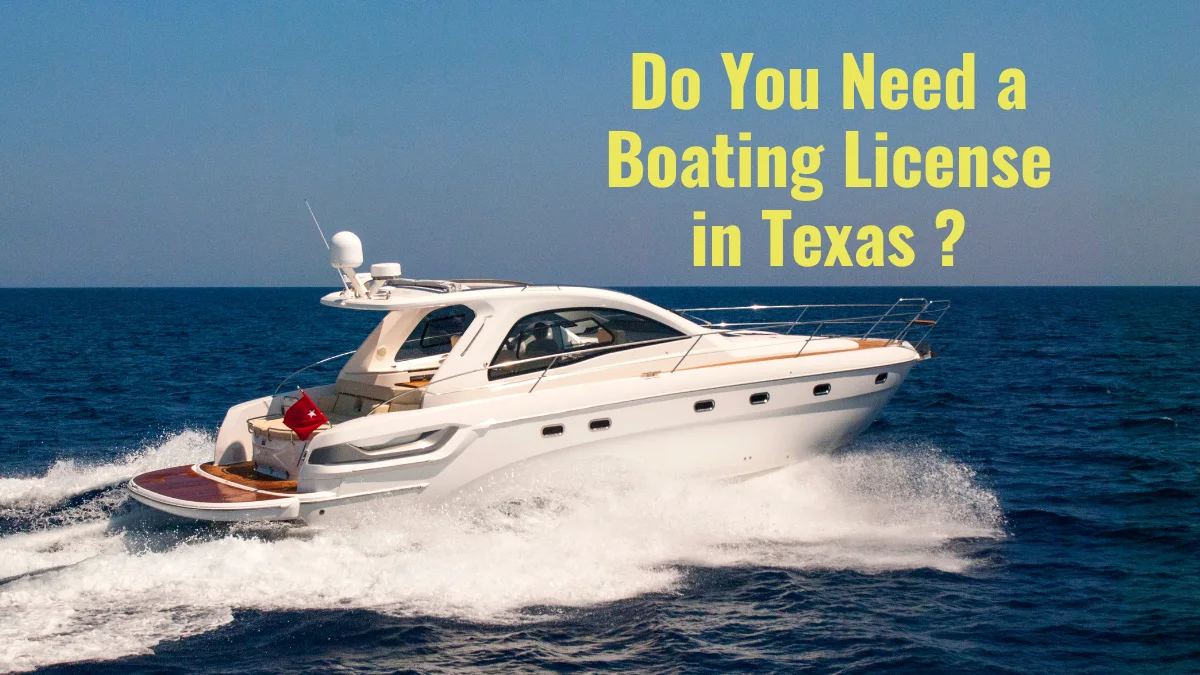
Do you need a boating license in Texas is one of the most searched boating questions in the state, and the answer trips people up because Texas does not actually issue a boating license the way it issues a driver’s license. What Texas requires instead is a boater education certificate for certain age groups operating motorized vessels.
If you were born on or after September 1, 1993, you must complete an approved boater education course before you legally operate a motorized boat on Texas public water. This article covers exactly who needs education, what it costs, how to get it, and what rules apply on Texas waterways.
Texas does not issue a boating license. Instead, anyone born on or after September 1, 1993 must complete an approved boater education course before operating a motorized boat. The course is free online through TPWD or costs $34.95 through third-party providers. A boater education card serves as permanent proof of completion.
Must Read: Texas Hunting License Cost: Every Fee, Tag & Stamp You Need to Know
Do You Need a Boating License in Texas: The Direct Answer
Texas Parks and Wildlife Department (TPWD) does not issue boating licenses. The state uses a boater education requirement instead. Here is who must comply:
Anyone who:
- Was born on or after September 1, 1993
- Operates a motorized vessel on Texas public water
- Operates a vessel with a motor of any horsepower
Must complete a TPWD-approved boater education course and carry their boater education card while on the water.
Anyone born before September 1, 1993 can legally operate a motorized boat in Texas without any boater education requirement. Age is the only determining factor for the education requirement, not the size of the boat or the type of water.
This means do you need a boating license in Texas has a two-part answer: there is no license, but younger operators need a boater education certificate that functions similarly.
Who Is Exempt from Texas Boater Education
Several groups are exempt from the Texas boater education requirement:
- Anyone born before September 1, 1993
- Anyone operating a vessel on private water not connected to public waterways
- Anyone accompanied on the vessel by a person 18 or older who has completed boater education or was born before September 1, 1993 (the accompanying adult must be able to take immediate control)
- Anyone who holds a valid marine operator’s license issued by the U.S. Coast Guard
- Non-residents who have a valid boating safety certificate from another state that meets the National Association of State Boating Law Administrators (NASBLA) standards
The accompanying adult exemption applies only when that adult is physically present on the vessel and capable of taking over operation at any moment. An adult on shore or on a different boat does not satisfy this requirement.
Texas Boater Education: Course Options and Costs
The Texas boater education course is available in several formats. TPWD approves all course providers. Here are your options:
1. Free Online Course Through TPWD TPWD offers a free boater education course at tpwd.texas.gov. The course covers Texas boating laws, navigation rules, safety equipment, and emergency procedures. After completing the online course, you must pass a proctored exam at a TPWD field office or with a certified volunteer examiner.
2. Online Course Through Third-Party Providers NASBLA-approved providers like Boat Ed, BoatUS Foundation, and Boater Exam offer fully online courses including the final exam.
Cost comparison:
| Provider | Course Cost | Format | Card Delivery |
|---|---|---|---|
| TPWD (tpwd.texas.gov) | Free | Online plus proctored exam | Mailed card |
| Boat Ed | $34.95 | Fully online | Instant certificate, mailed card |
| BoatUS Foundation | Free | Online | Digital certificate |
| Boater Exam | $34.95 | Fully online | Mailed card |
3. Classroom Course TPWD-certified volunteer instructors teach free classroom courses across Texas. Courses run one to two days and cover the same material as the online versions. Find local courses through TPWD’s course finder at tpwd.texas.gov.
4. Home Study Course A printed home study version is available through TPWD. You complete the material at your own pace and then take a proctored exam. Cost is approximately $10 for the printed materials.
The boater education card issued after completing any approved course is valid for life. You complete the course once and carry the card permanently.
Texas Boating Laws Every Operator Must Know
Whether or not do you need a boating license in Texas applies to you based on age, all operators must follow Texas boating laws. Here are the key rules:
Vessel Registration All motorized boats and sailboats over 14 feet operating on Texas public water must be registered with TPWD. Registration fees vary by vessel length:
| Vessel Length | Registration Fee (2-year) |
|---|---|
| Under 16 feet | $32 |
| 16 to under 26 feet | $52 |
| 26 to under 40 feet | $126 |
| 40 feet and over | $150 |
Registration must be renewed every two years. The registration number must be displayed on both sides of the bow in block letters at least three inches high.
Required Safety Equipment Texas law requires all boats to carry specific safety equipment at all times:
- One Coast Guard-approved life jacket (PFD) for every person on board
- Children under 13 must wear their life jacket while the boat is underway on public water
- A throwable flotation device (Type IV PFD) on boats 16 feet and longer
- A fire extinguisher on boats with enclosed engine compartments or fuel tanks
- A functioning horn or whistle audible for at least half a mile
- Navigation lights for boats operated between sunset and sunrise
Boating Under the Influence (BUI) Operating a boat while intoxicated (BWI) in Texas is a criminal offense under Texas Penal Code Section 49.06. The legal limit is 0.08% blood alcohol concentration, identical to the limit for driving a motor vehicle.
Penalties for BWI in Texas:
- First offense: Class B misdemeanor, up to $2,000 fine, 72 hours to 180 days in jail
- Second offense: Class A misdemeanor, up to $4,000 fine, up to one year in jail
- Third offense: Third-degree felony, up to $10,000 fine, 2 to 10 years in prison
Texas game wardens and water safety officers actively enforce BWI laws on all major Texas lakes and waterways, particularly on holiday weekends.
Speed Limits and Slow-No-Wake Zones Texas does not have a universal statewide speed limit on open water. Local authorities set speed limits on specific bodies of water. Slow-no-wake zones are common near marinas, swimming areas, and residential docks. Violating a slow-no-wake zone carries fines up to $500.
Age Restrictions Children under 13 cannot operate a personal watercraft (PWC) such as a Jet Ski in Texas under any circumstances. Children ages 13 to 17 can operate a PWC only if they have completed an approved boater education course.
Must Check: How to Get a Motorcycle License in Texas – Step-by-Step Guide for Riders
Personal Watercraft (PWC) Rules in Texas
PWC rules in Texas are stricter than general boating rules. If you are asking do you need a boating license in Texas specifically for a Jet Ski or other personal watercraft, the answer adds extra requirements:
- All PWC operators must have a valid boater education card regardless of age (if born on or after September 1, 1993)
- No one under 13 may operate a PWC
- All PWC operators and passengers must wear a Coast Guard-approved life jacket at all times while the PWC is moving
- PWCs may not be operated between sunset and sunrise
- Towing a person on a PWC requires a second person on board to observe the person being towed
- Operators must maintain a distance of at least 50 feet from other vessels, swimmers, and fixed structures when operating above slow-no-wake speed
Vessel Registration vs. Boater Education: Understanding Both
People researching do you need a boating license in Texas sometimes confuse vessel registration with operator certification. These are two separate requirements:
Vessel Registration applies to the boat itself. You register the vessel with TPWD and display the registration numbers on the hull. This is similar to registering a car with the state. The owner is responsible for registration regardless of who operates the boat.
Boater Education applies to the operator. The person driving the boat must have completed an approved course if they were born on or after September 1, 1993. The certificate belongs to the individual, not the vessel.
You can operate a registered boat without boater education if you were born before September 1, 1993. You cannot operate a boat without education if you were born on or after that date, regardless of whether the boat is registered.
Out-of-State and Visiting Boaters in Texas
Non-residents asking do you need a boating license in Texas when visiting from another state follow these rules:
Non-residents may operate a boat in Texas without Texas-specific boater education if they hold a valid boating safety certificate from their home state, provided that certificate meets NASBLA standards. Most U.S. state boating education certificates meet this standard.
Non-residents who do not hold any boating safety certificate and were born on or after September 1, 1993 must complete an approved Texas boater education course before operating a motorized vessel on Texas public water.
Vessels from other states operating on Texas water for fewer than 90 consecutive days do not need Texas registration. After 90 days, Texas registration is required.
How to Get Your Texas Boater Education Card
Here is the step-by-step process for completing the Texas boater education requirement:
- Choose your course format. Decide between the free TPWD online course, a free classroom course, or a paid fully-online third-party course.
- Complete the coursework. The online TPWD course and most third-party courses take 3 to 6 hours to complete. Classroom courses run 8 to 12 hours over one or two days.
- Pass the final exam. You must score at least 70% to pass. Most online courses allow multiple attempts. The proctored TPWD exam requires an in-person visit.
- Receive your certificate. Third-party online courses issue a temporary certificate immediately upon passing. Your official boater education card arrives by mail within 2 to 4 weeks.
- Carry your card on the water. Texas law requires you to have your boater education card on your person while operating a motorized vessel. A digital copy on your phone is acceptable under Texas law.
If you lose your card, TPWD can reissue it for $2. Third-party providers typically reissue replacement cards for $10 to $15.
Penalties for Boating Without Required Education in Texas
If a Texas game warden or water safety officer stops you on the water and you cannot produce a boater education card when required, the consequences include:
- A Class C misdemeanor citation
- Fine up to $500 for a first offense
- Potential requirement to complete boater education before returning to the water
Texas game wardens conduct routine vessel checks on all major waterways. They check registration, safety equipment, and boater education cards. On busy holiday weekends like Memorial Day, Fourth of July, and Labor Day, enforcement presence increases significantly on lakes like Lake Travis, Lake Conroe, Lake Texoma, and Canyon Lake.
Repeated violations or violations combined with BWI carry significantly higher penalties.
Texas Boating Safety Statistics
Understanding why Texas enforces boater education helps put the question of do you need a boating license in Texas in context. Texas consistently ranks among the top five states in the country for recreational boating fatalities.
According to TPWD boating accident data:
- Texas averages 30 to 40 boating fatalities per year
- Alcohol involvement is a factor in approximately 30% of fatal boating accidents
- The most common cause of boating fatalities is falling overboard
- The majority of drowning victims in boating accidents were not wearing a life jacket
- Operator inattention and inexperience are the top contributing factors in non-fatal accidents
These numbers explain why Texas requires boater education for younger operators and enforces life jacket laws for children. The education requirement directly targets operator inexperience, which causes more accidents than any other single factor.
Reciprocity: Does a Texas Boater Education Card Work in Other States?
Yes. A Texas boater education card issued through a NASBLA-approved course is recognized in all U.S. states and Canadian provinces that require boater education. If you complete your course in Texas and travel to Florida, Michigan, or California with your boat, your Texas card satisfies their education requirements.
Confirm specific state requirements before traveling, as some states have additional age or vessel-type rules that apply beyond the base education requirement.
Frequently Asked Questions
Do you need a boating license in Texas to operate a boat?
Texas does not issue boating licenses. Anyone born on or after September 1, 1993 must complete a TPWD-approved boater education course to legally operate a motorized vessel. The boater education card serves as permanent proof of completion and must be carried while boating on Texas public water.
What age requires boater education in Texas?
Anyone born on or after September 1, 1993 must complete boater education before operating a motorized boat in Texas. There is no minimum age for the education requirement itself. Children under 13 cannot operate a personal watercraft at all, and operators 13 to 17 must have completed boater education to operate a PWC.
How much does Texas boater education cost?
The TPWD online course is free, though it requires a proctored final exam. Third-party fully online courses from providers like Boat Ed cost $34.95 and include the final exam. Classroom courses taught by TPWD-certified volunteer instructors are free. Your boater education card is valid for life after you pass once.
Can I use my phone to show my boater education card in Texas?
Yes. Texas law allows boaters to display their boater education card digitally on a mobile device during a vessel inspection. Keep a screenshot or the provider app accessible on your phone while on the water. Carrying the physical card is also acceptable and recommended as a backup if your phone battery dies.
Does a boater education card from another state work in Texas?
Yes. Non-residents with a valid boating safety certificate from any U.S. state that meets NASBLA standards can operate a boat in Texas without completing a Texas-specific course. Most state boating education certificates meet NASBLA standards. Carry your home state certificate on the water as you would in your home state.
What happens if I operate a boat in Texas without boater education?
Operating a motorized vessel without the required boater education card in Texas is a Class C misdemeanor with fines up to $500. Texas game wardens conduct routine vessel checks on all major waterways and actively enforce boater education requirements, particularly on busy holiday weekends and at popular lake access points.
Read More: Does Texas Require a Front License Plate? What Drivers Must Know
Do you need a boating license in Texas comes down to your birth date. If you were born on or after September 1, 1993, you must complete an approved boater education course before operating a motorized boat on Texas public water. The course is free through TPWD or $34.95 through online providers, takes a few hours to complete, and the card you receive is valid for life.
Get your card before you get on the water, carry it every time you boat, make sure every child on board has a life jacket, and follow the registration and equipment rules that apply to every Texas boater regardless of age.









Leave a Comment