

How to get a bonded title in Texas is a critical question for vehicle owners who have lost their titles, purchased vehicles without proper documentation, or inherited vehicles without clear ownership papers. A bonded title, officially called a Certificate of Title with a Bonded Title Brand, allows you to establish legal ownership of a vehicle when standard title transfer procedures cannot be completed.
The process involves purchasing a surety bond, submitting specific forms to the Texas Department of Motor Vehicles, and paying required fees. While the bonded title process takes 4 to 6 weeks and costs $300 to $500 total, it provides a legal pathway to ownership when no other options exist. Our comprehensive guide explains eligibility requirements, step-by-step procedures, costs, and everything you need to know about how to get a bonded title in Texas successfully.
What Is a Bonded Title in Texas
A bonded title is a legal document establishing vehicle ownership when standard title documentation is missing, lost, or incomplete.
The Bonded Title Brand
Texas bonded titles include a special brand or notation indicating the title was issued with a surety bond. This brand appears on the title document and remains for three years from the issue date.
After three years of clean ownership with no claims against the bond, you can apply to have the brand removed. The title then becomes a standard Texas certificate of title without any special notations.
Purpose of the Surety Bond
The surety bond protects previous owners or lienholders who may have valid claims to the vehicle. If someone proves they own the vehicle or hold a valid lien within three years, they can make a claim against the bond.
The bond amount equals 1.5 times the vehicle’s appraised value. This requirement ensures adequate protection for potential claimants while allowing rightful owners to establish legal title.

When Bonded Titles Are Needed
Bonded titles solve ownership documentation problems in specific situations.
Common scenarios requiring bonded titles:
- You purchased a vehicle but the seller never provided the title
- The vehicle title was lost and the previous owner cannot be located
- You inherited a vehicle but cannot locate title documents
- Bill of sale exists but no title was transferred
- Mechanic’s lien sale where title documentation is incomplete
- Abandoned vehicle situations with unclear ownership
- Gift transfers without proper title documentation
- Barn find or estate sale purchases without titles
Bonded titles provide legitimate ownership pathways when good faith purchases go wrong or documentation gets lost over time.
Must Read: How To File Homestead Exemption In Texas
Eligibility Requirements for Bonded Titles in Texas
Not every vehicle or situation qualifies for bonded title procedures. Texas establishes specific eligibility criteria.
Vehicle Must Be Titled in Texas
The vehicle must have been last titled in Texas or have no previous title history. Vehicles currently titled in other states must be titled in those states first, then transferred to Texas through standard procedures.
If a vehicle was last titled in another state and you cannot obtain that title, you must pursue bonded title procedures in that state, not Texas.
Vehicle Age and Type Restrictions
Most standard passenger vehicles qualify for bonded titles. Restrictions apply to certain vehicle types.
Vehicles that qualify:
- Cars, trucks, and SUVs
- Motorcycles and scooters
- Travel trailers and RVs
- Manufactured homes
- Boats and watercraft
- Off-road vehicles
Vehicles that do NOT qualify:
- Vehicles with existing liens recorded in Texas
- Stolen vehicles or vehicles reported stolen
- Vehicles subject to manufacturer recalls affecting safety
- Homemade trailers under certain circumstances
- Vehicles with existing Texas titles held by another person
- Salvage vehicles in some situations
No Outstanding Liens
You cannot obtain a bonded title for vehicles with recorded liens unless the lienholder releases the lien. The Texas DMV verifies no active liens exist before approving bonded title applications.
If you discover a lien during the application process, you must either pay off the lien and obtain a release or pursue other ownership establishment methods.
Vehicle Inspection Passed
The vehicle must pass a Vehicle Identification Number (VIN) inspection by an authorized inspector before applying for a bonded title. This inspection verifies the VIN matches vehicle documentation and the vehicle is not reported stolen.
You Are a Texas Resident
Bonded title applicants must be Texas residents with valid Texas addresses. Out-of-state residents cannot obtain Texas bonded titles.
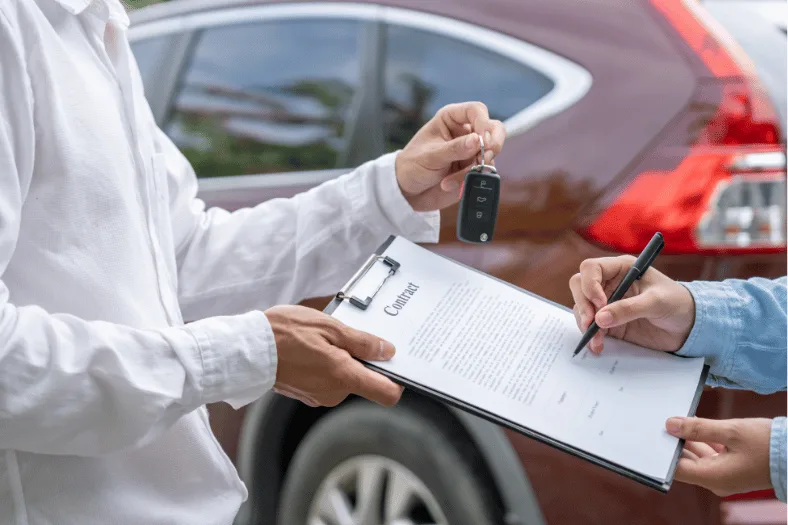
Step-by-Step Process: How to Get a Bonded Title in Texas
The bonded title process involves multiple sequential steps, each requiring specific documentation and procedures.
Step 1: Verify the Vehicle Qualifies
Before investing time and money, confirm your vehicle qualifies for a bonded title.
Verification actions:
- Check the National Motor Vehicle Title Information System (NMVTIS) to confirm no active title exists in another state
- Contact Texas DMV at 888-368-4689 to verify no liens exist
- Confirm the vehicle is not reported stolen through local law enforcement
- Verify the vehicle type qualifies for bonded titles
This preliminary research prevents wasted effort on vehicles that do not qualify.
Step 2: Obtain a VIN Inspection
Schedule and complete a VIN inspection with an authorized inspector.
Authorized VIN inspectors in Texas:
- Texas Department of Motor Vehicles regional offices
- County tax assessor-collector offices
- Texas Department of Public Safety offices
- Licensed vehicle dealers
- Auto theft investigators
Bring the vehicle and any documentation you have (bill of sale, previous registration, insurance documents) to the inspection. The inspector examines the VIN plate, door jamb stickers, and other identifying information.
VIN inspections cost $2 when performed at tax assessor-collector offices and are free at some other locations. The inspector provides Form VTR-68-A (Application for Texas Title and/or Registration) with the inspection certification completed.
Step 3: Determine the Vehicle’s Value
You need an official appraisal establishing the vehicle’s current value. The surety bond amount equals 1.5 times this appraised value.
Acceptable appraisal sources:
Licensed vehicle dealers: Most common and convenient option. Visit a licensed dealer who can provide written appraisals on dealership letterhead. Many dealers charge $25 to $75 for this service.
Certified appraisers: Professional vehicle appraisers provide detailed value assessments. Costs range from $75 to $150.
Online appraisal tools: Some insurance companies and financial institutions provide written vehicle valuations. Kelley Blue Book and NADA Guide values may be accepted if on official letterhead with signatures.
The appraisal must include:
- Vehicle year, make, and model
- VIN
- Current mileage
- Vehicle condition assessment
- Appraised dollar value
- Appraiser’s signature and date
- Appraiser’s license or credentials
Keep the original appraisal document as you will submit it with your bonded title application.
Step 4: Purchase a Surety Bond
Contact a surety bond company to purchase a Certificate of Title Bond, also called a Lost Title Bond or Defective Title Bond.
Finding surety bond companies:
Search online for “Texas title bond” or “certificate of title bond Texas.” Major providers include:
- Surety Bonds Direct
- Lance Surety Bond Associates
- SuretyBonds.com
- Viking Bond Service
- Nationwide bond companies
Most companies offer online applications and issue bonds within 24 to 48 hours.
Surety bond cost calculation:
The bond amount equals 1.5 times your vehicle’s appraised value. You do not pay the full bond amount. Instead, you pay a premium, typically 1% to 15% of the bond amount depending on your credit score.
Example bond costs:
| Vehicle Value | Required Bond Amount | Premium Cost (Good Credit) | Premium Cost (Fair Credit) |
|---|---|---|---|
| $5,000 | $7,500 | $75 – $150 | $150 – $375 |
| $10,000 | $15,000 | $150 – $300 | $300 – $750 |
| $15,000 | $22,500 | $225 – $450 | $450 – $1,125 |
| $20,000 | $30,000 | $300 – $600 | $600 – $1,500 |
Most applicants with good credit pay $100 to $300 for surety bonds on typical passenger vehicles.
Bond application requirements:
Surety companies require:
- Completed bond application
- Copy of vehicle appraisal
- Social Security number for credit check
- Payment information
After approval, the surety company issues the bond certificate, typically via email and mail. The bond must be original with the company’s official seal and authorized signatures.
Step 5: Complete Texas DMV Forms
Download and complete required Texas DMV forms for bonded title applications.
Required forms:
Form VTR-130-U (Application for a Bonded Title): This primary form requests information about you, the vehicle, how you acquired it, and your efforts to obtain a standard title.
Complete every section thoroughly. Explain in detail how you obtained the vehicle and what steps you took to locate the previous owner or obtain the title. Incomplete forms delay processing.
Form VTR-68-A (Application for Texas Title and/or Registration): Completed during your VIN inspection with the inspector’s certification.
Form 130-U Checklist: Complete this checklist verifying you have included all required documents.
All forms are available on the Texas DMV website at www.txdmv.gov.
Step 6: Gather Supporting Documentation
Compile all required documents for submission with your bonded title application.
Required documents:
- Original surety bond certificate
- Original vehicle appraisal
- Completed Form VTR-130-U
- Completed Form VTR-68-A with VIN inspection certification
- Valid Texas driver’s license or ID card (copy)
- Proof of liability insurance (copy)
- Bill of sale, if available
- Previous registration or title documents, if available
- Any correspondence with previous owners
- Affidavit explaining vehicle acquisition and title efforts
Optional but helpful documents:
- Photographs of the vehicle
- Repair receipts or maintenance records
- Insurance history
- Previous owner contact attempts documentation
- Notarized statements from witnesses to the purchase
More documentation strengthens your application and demonstrates good faith efforts to establish ownership properly.
Step 7: Submit Application to Texas DMV
Mail your complete bonded title application package to the Texas Department of Motor Vehicles.
Mailing address:
Texas Department of Motor Vehicles
Vehicle Titles and Registration Division
4000 Jackson Avenue
Austin, TX 78731
Send via certified mail with return receipt requested. This provides proof of delivery and estimated processing timelines.
Do not submit bonded title applications to county tax assessor-collector offices. These applications must go directly to the Texas DMV in Austin for specialized review.
Step 8: Pay Required Fees
Include payment for bonded title fees with your application.
Bonded title fees:
- Title application fee: $33
- Processing fee: $2
- Registration fees: Varies by vehicle weight and type
- Optional registration fees: Varies based on chosen registration period
Total estimated costs: $35 to $150 for title and basic registration.
Payment must be by check or money order made payable to “Texas Department of Motor Vehicles.” Personal checks are accepted.
Step 9: Await DMV Review and Approval
The Texas DMV reviews bonded title applications carefully, verifying all information and ensuring no outstanding issues exist.
Review timeline: 4 to 6 weeks typical processing time. Complex cases or incomplete applications take longer.
Possible outcomes:
Approval: The DMV mails your bonded title certificate and registration materials to your address. The title includes the bonded title brand notation.
Request for additional information: The DMV contacts you requesting clarification or additional documents. Respond promptly to avoid further delays.
Denial: The DMV denies applications that do not meet requirements or involve vehicles with disqualifying factors. Denial letters explain reasons and may suggest alternative solutions.
Step 10: Register the Vehicle
Once you receive your bonded title, complete vehicle registration at your county tax assessor-collector office if you did not include registration with your bonded title application.
Bring your bonded title, proof of insurance, and payment for registration fees. The county issues license plates and registration stickers.
Costs Associated with Getting a Bonded Title in Texas
The total cost for how to get a bonded title in Texas includes multiple components.
Surety Bond Premium
$100 to $600 for most vehicles, depending on value and your credit score. This represents the largest variable cost in the bonded title process.
VIN Inspection Fee
$0 to $50 depending on inspection location. Most tax offices charge $2.
Vehicle Appraisal Fee
$25 to $150 depending on appraiser chosen and vehicle type.
DMV Title Application Fees
$33 for title application, $2 for processing, totaling $35.
Registration Fees
$50 to $100 depending on vehicle weight, type, and registration period chosen.
Miscellaneous Costs
$10 to $30 for copies, notary services, certified mail, and other incidental expenses.
Total Estimated Cost
$300 to $500 for most standard vehicles with good credit
$500 to $1,000+ for higher-value vehicles or applicants with credit challenges
These costs are one-time expenses providing permanent legal ownership documentation.
Common Reasons for Bonded Title Application Denials
Understanding denial reasons helps you avoid mistakes and delays.
Outstanding Liens
Active liens on vehicles prevent bonded title issuance. The DMV cannot issue new titles when existing lienholders have recorded interests.
Research lien status thoroughly before beginning the application process. Pay off liens or obtain releases before applying.
Stolen Vehicle Status
Vehicles reported stolen in any jurisdiction do not qualify for bonded titles until the stolen status is cleared.
VIN inspections typically reveal stolen status. If your vehicle shows as stolen, contact the agency that filed the report to resolve the issue.
Incomplete Documentation
Missing required forms, unsigned documents, or incomplete information cause denials or delays.
Review the bonded title checklist carefully. Include every required document and complete every form section.
Insufficient Bond Amount
Surety bonds must equal exactly 1.5 times the vehicle’s appraised value. Incorrect bond amounts cause automatic denials.
Verify your bond amount matches the calculation before submitting your application. Bond companies typically calculate correctly, but errors occur.
Vehicle Titled in Another State
Active titles in other states must be resolved before Texas will issue bonded titles.
Check NMVTIS and contact states where the vehicle was previously registered to confirm title status.
Incorrect Vehicle Information
VIN errors, wrong year/make/model information, or inconsistent vehicle descriptions across documents create red flags.
Verify all vehicle information matches exactly across every document before submission.
Alternative Options to Bonded Titles
Bonded titles are not always necessary. Consider alternatives that may be simpler or cheaper.
Standard Title Transfer
If you can locate the previous owner, a standard title transfer is simpler and cheaper. Contact previous owners through:
- Information on old registration documents
- Social media searches
- Online people finder services
- Previous address visits
- Mutual acquaintance inquiries
Previous owners can request duplicate titles from the DMV for $2, then sign them over to you.
Mechanics Lien Title
If you performed repairs or storage on a vehicle and the owner abandoned it, mechanic’s liens provide alternative ownership establishment methods.
Texas Transportation Code Chapter 70 governs mechanic’s liens. The process involves certified mail notices, waiting periods, and specific documentation requirements.
Court-Ordered Title
In some circumstances, district courts can order the DMV to issue titles. This option suits situations involving:
- Inheritance disputes
- Divorce settlements
- Contract disputes
- Estate administration
Court-ordered titles require attorney assistance and legal proceedings but avoid bonded title requirements.
Out-of-State Title Recovery
If the vehicle was last titled in another state, pursuing title recovery in that state may be easier than obtaining a Texas bonded title.
Many states have simpler processes for duplicate titles or have longer periods for title recovery without bonds.
Removing the Bonded Title Brand
The bonded title brand is not permanent. After three years, you can apply to have it removed.
Three-Year Waiting Period
The bond remains in effect for three years from the bonded title issue date. During this period, anyone with legitimate ownership claims can file against the bond.
If no claims are filed within three years, the bond expires and the surety company releases liability.
Applying for Brand Removal
After three years, complete Form VTR-565 (Statement of No Interest or Security Interest Release) and submit it to the Texas DMV with:
- Current bonded title
- Proof no claims were filed against the bond
- Letter from surety company confirming bond expiration
- Application fee
The DMV issues a new title without the bonded title brand, giving you a standard Texas certificate of title.
Value of Brand Removal
Removing the bonded title brand increases vehicle resale value and eliminates buyer concerns. Many buyers avoid bonded title vehicles due to uncertainty about ownership history.
Clean titles command higher prices and sell faster than bonded title vehicles.
Selling a Vehicle with a Bonded Title
Bonded titles can be transferred to new owners like standard titles, though the brand remains until the three-year period expires.
Disclosure Requirements
You must disclose the bonded title status to potential buyers. Failing to disclose material facts about title status can result in legal liability.
Honest disclosure about why the bonded title was necessary builds buyer confidence.
Transfer Process
Bonded titles transfer through standard Texas title transfer procedures:
- Complete the assignment section on the back of the bonded title
- Provide the buyer with the signed title
- Buyer submits title and registration application to their county
- Buyer receives title with the bonded title brand
The bonded title brand transfers to the new title and remains until the three-year period expires from the original issue date, not from the transfer date.
Impact on Resale Value
Vehicles with bonded titles typically sell for 10% to 30% less than identical vehicles with clean titles. Buyers perceive increased risk and uncertainty.
Waiting until after the three-year period to remove the brand before selling maximizes resale value.
Legal Protections and Considerations
Bonded titles provide legal ownership but carry specific considerations.
Your Legal Rights as Bonded Title Holder
Once issued, bonded titles grant full legal ownership rights including:
- Right to register and operate the vehicle
- Right to sell or transfer ownership
- Right to obtain insurance
- Right to claim the vehicle as your property
- Protection from seizure by previous owners without claims against the bond
Previous Owner Rights
Previous owners or lienholders retain the right to file claims against the surety bond within three years if they can prove:
- They held legal ownership when you obtained the bonded title
- They had no knowledge of your ownership claim
- They suffered financial loss due to the vehicle being titled to you
Valid claims trigger bond payments to the claimant up to the bond amount. If a claim exceeds the bond amount, the bonded title holder may owe the difference.
Liability Protection
The surety bond protects you from personal liability up to the bond amount. If valid ownership claims arise, the bond pays claimants rather than requiring payment from you directly.
However, if you knowingly obtained a bonded title on a vehicle you knew belonged to someone else, the surety company can pursue repayment from you after paying claims.
Insurance Considerations
Most insurance companies insure vehicles with bonded titles without issues. Inform your insurance agent about the bonded title status when obtaining coverage.
Some specialty insurance companies or classic car insurers may require additional documentation or impose restrictions on bonded title vehicles.
Special Situations for Bonded Titles
Certain circumstances create unique bonded title considerations.
Inherited Vehicles
When inheriting vehicles without titles, bonded titles provide ownership establishment if the deceased owner’s title cannot be located.
Alternatives include probate court proceedings to transfer ownership, which may avoid bonded title requirements if proper legal documentation exists.
Gifted Vehicles
If someone gave you a vehicle but lost the title before transfer, bonded titles establish your ownership when the giver cannot be located or refuses to cooperate.
Document the gift with notarized statements from witnesses when possible. This documentation supports your bonded title application.
Abandoned Vehicles
Finding abandoned vehicles on your property does not automatically grant ownership rights. Texas law requires specific procedures for claiming abandoned vehicles.
Bonded titles can be part of abandoned vehicle claims but must follow legal abandonment procedures first, including proper notices and waiting periods.
Classic and Antique Vehicles
Older vehicles often have complicated title histories with missing documentation. Bonded titles work well for establishing ownership of barn finds and estate sale purchases.
Accurate appraisals are particularly important for classic vehicles, as values vary dramatically based on condition and authenticity.
Homemade Trailers
Homemade trailers present unique challenges. Many were never titled originally. Texas requires titles for trailers over a certain weight.
Bonded titles for homemade trailers require additional documentation proving you built the trailer or purchased materials, including receipts and construction photographs.
Frequently Made Mistakes in the Bonded Title Process
Avoiding common errors speeds your application and improves approval chances.
Incorrect Bond Amount Calculation
Always verify the bond equals exactly 1.5 times the appraised value. Even small calculation errors cause denials.
Using Unofficial Appraisals
Online estimates from websites without official letterhead and signatures are typically rejected. Use licensed dealers or certified appraisers.
Incomplete Form VTR-130-U
The narrative section explaining vehicle acquisition and title recovery efforts must be detailed and complete. Vague or minimal explanations delay approval.
Not Including Supporting Documentation
Every document you have supporting ownership should be included. Bills of sale, old registrations, insurance documents, and correspondence with previous owners strengthen applications.
Assuming Instant Processing
Bonded title applications take 4 to 6 weeks minimum. Do not expect fast turnaround. Plan accordingly if you need the vehicle registered quickly.
Neglecting VIN Inspection
Some applicants submit applications without proper VIN inspections. The inspection must be completed by authorized inspectors with proper certifications on Form VTR-68-A.
Choosing Inadequate Bonds
Ensure your surety bond specifically states it is a Texas Certificate of Title Bond. Generic bonds or bonds from unauthorized companies are rejected.
State-Specific Resources for Texas Bonded Titles
Multiple resources assist with the bonded title process.
Texas Department of Motor Vehicles
Website: www.txdmv.gov
Phone: 888-368-4689
Hours: Monday through Friday, 8:00 AM to 5:00 PM
The DMV website provides downloadable forms, detailed instructions, and contact information for specific questions.
County Tax Assessor-Collector Offices
While bonded title applications go to the state DMV, county tax offices provide VIN inspections, answer general questions, and handle registration after bonded titles are issued.
Find your county tax office through the Texas DMV website or your county government website.
Texas Department of Public Safety
Website: www.dps.texas.gov
DPS offices provide VIN inspections and can verify vehicle information in law enforcement databases.
Surety Bond Companies
Multiple companies specialize in Texas title bonds. Compare rates and service levels before choosing a provider.
Legal Aid Organizations
If your bonded title situation involves legal complications, legal aid organizations throughout Texas provide free or low-cost assistance to qualifying individuals.
Comparing Bonded Titles Across States
Texas bonded title procedures differ from other states. If you are considering which state to pursue bonded title in, comparisons help.
| State | Bond Required | Bond Amount | Processing Time | Approximate Cost |
|---|---|---|---|---|
| Texas | Yes | 1.5x value | 4-6 weeks | $300-$500 |
| California | Yes | 2x value | 8-12 weeks | $500-$800 |
| Florida | Yes | 1.5x value | 6-8 weeks | $350-$600 |
| Arizona | Yes | 3x value | 6-10 weeks | $600-$1,200 |
| Georgia | Yes | 1.5x value | 4-6 weeks | $300-$500 |
| Oklahoma | Yes | 1.5x value | 3-5 weeks | $250-$450 |
Texas offers moderate requirements and reasonable processing times compared to many states.
Conclusion
Learning how to get a bonded title in Texas empowers vehicle owners to establish legal ownership when standard title transfers are impossible due to lost documentation, uncooperative sellers, or complicated ownership histories.
The process involves obtaining a VIN inspection, securing a vehicle appraisal, purchasing a surety bond equaling 1.5 times the vehicle’s value, completing Texas DMV forms, and submitting comprehensive applications to the state DMV in Austin. Total costs typically range from $300 to $500 for standard vehicles, with processing taking 4 to 6 weeks on average.
While bonded titles include a special brand notation for three years, they provide full legal ownership rights and can be converted to standard titles after the bond period expires. For Texas residents facing title documentation challenges, bonded titles offer practical, legal solutions establishing vehicle ownership when other options are unavailable or impractical.








Leave a Comment