

Pursuing a career in firefighting offers the opportunity to serve your community, save lives, and join one of the most respected professions in America. If you’re researching how to become a firefighter in Texas, you’re exploring a career path that combines physical challenges, mental resilience, and the deep satisfaction of emergency response work.
Texas employs over 27,000 firefighters across hundreds of departments, from major metropolitan fire services in Houston, Dallas, and San Antonio to smaller rural volunteer companies. In this article, we’ve provided everything you need to know about launching your firefighting career in the Lone Star State, from basic requirements through training, certification, and hiring.
Also Read: How to Become a Real Estate Broker in Texas
Why Pursue Firefighting in Texas?
Texas presents exceptional opportunities for aspiring firefighters. The state’s growing population creates consistent demand for qualified fire personnel. Major cities offer competitive salaries, excellent benefits, and clear advancement paths. Smaller departments provide tight-knit team environments and diverse responsibilities.
Texas firefighters earn between $35,000 and $75,000 annually, with experienced firefighters in major cities exceeding $85,000. Total compensation packages include health insurance, retirement benefits, paid time off, and educational assistance programs.
Beyond financial rewards, firefighting delivers:
- Job security and stability
- Strong sense of purpose and community impact
- Camaraderie with dedicated team members
- Diverse daily responsibilities and challenges
- Opportunities for specialization and advancement
- Respect and trust from the public
Basic Requirements and Qualifications
Before starting the process of how to become a firefighter in Texas, verify you meet fundamental requirements. Standards vary slightly between departments, but common prerequisites include:
Age Requirements
- Minimum age: 18 years old for most departments
- Some departments require candidates to be 21
- No maximum age limit in most cases
Education Standards
- High school diploma or GED required
- College coursework preferred by competitive departments
- Associate or bachelor’s degree in fire science advantageous
Physical and Medical Standards
- Pass comprehensive medical examination
- Meet vision standards (correctable to 20/20)
- Pass hearing tests
- No conditions preventing strenuous physical activity
- Maintain healthy body mass index
Legal Requirements
- Valid Texas driver’s license
- U.S. citizenship or legal work authorization
- Clean criminal background (felony convictions typically disqualifying)
- No history of domestic violence
- Good credit history
Personal Characteristics
- Strong work ethic and reliability
- Team player mentality
- Problem-solving abilities
- Stress management skills
- Communication proficiency
- Commitment to public service
Must Read: How to Start a Tourist Drone Photography Business in Texas
How to Become a Firefighter in Texas: Step-by-Step Guide
A career in public safety attracts many Texans who want stable employment, community respect, and the chance to save lives. For those exploring how to become a firefighter in Texas, the path involves physical readiness, formal training, state certification, and strong commitment to service.
Texas maintains one of the largest firefighting workforces in the country, serving urban cities, suburban districts, and rural communities.
Step-by-Step Guide to Becoming a Firefighter
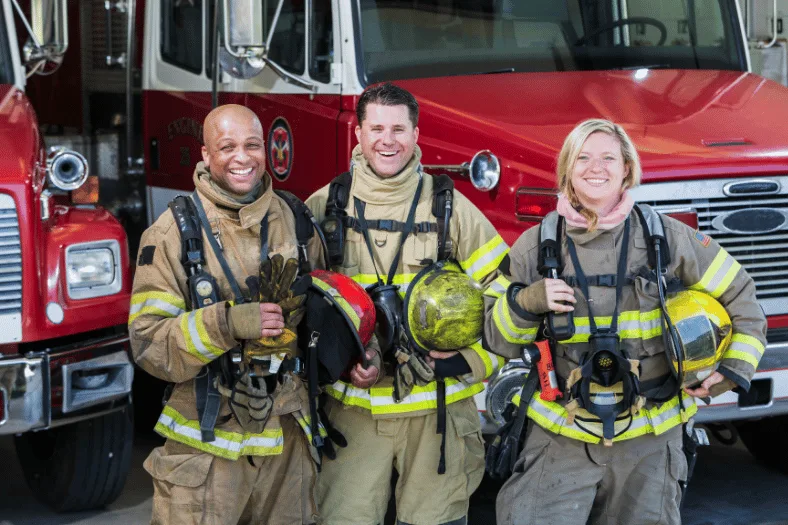
Step 1: Obtain Required Education
The first step in how to become a firefighter in Texas involves completing your basic education and pursuing fire service training. While a high school diploma meets minimum requirements, additional education significantly improves your competitiveness.
Educational Pathways:
- High School Preparation
- Focus on science, mathematics, and physical education
- Join volunteer programs or explorers programs
- Maintain strong grades and attendance
- Participate in team sports or leadership activities
- Fire Science Degree Programs
- Associate of Applied Science in Fire Science (2 years)
- Bachelor of Science in Fire Science (4 years)
- Emergency Medical Services degrees
- Fire Protection Engineering programs
- Community College Programs Texas community colleges offer affordable fire science programs:
- Houston Community College
- Lone Star College
- Austin Community College
- Tarrant County College
- San Antonio College
Benefits of Formal Education:
- Comprehensive fire science knowledge
- Faster career advancement opportunities
- Higher starting salaries in many departments
- Preparation for promotional exams
- Networking with industry professionals
- College credits toward certifications
Step 2: Obtain EMT Certification
Most Texas fire departments require or strongly prefer Emergency Medical Technician certification. Fire service work increasingly involves medical emergencies, with many departments responding to more EMS calls than fire calls. Learning how to become a firefighter in Texas requires embracing this medical component.
EMT Certification Levels:
| Certification | Training Hours | Scope of Practice |
|---|---|---|
| EMT-Basic | 150-190 hours | Basic life support, patient assessment, oxygen administration |
| EMT-Advanced (AEMT) | 250-350 hours | IV therapy, advanced airways, medication administration |
| Paramedic | 1,200-1,800 hours | Advanced life support, cardiac care, drug administration |
EMT Training Process:
- Enroll in state-approved EMT program
- Complete classroom instruction and clinical hours
- Pass National Registry EMT (NREMT) examination
- Apply for Texas Department of State Health Services certification
- Maintain certification through continuing education
Where to Get EMT Training:
- Community colleges throughout Texas
- Private EMS training academies
- Fire department cadet programs
- Technical schools and universities
- Online hybrid programs with practical components
Costs: EMT-Basic training ranges from $800 to $2,500. Paramedic programs cost $3,000 to $10,000.
Timeline: EMT-Basic requires 4 to 6 months. Paramedic certification takes 12 to 24 months.
Many candidates complete EMT-Basic before applying to fire departments, then pursue paramedic certification after hiring. Some departments sponsor paramedic training for firefighters who demonstrate commitment and aptitude.
Step 3: Complete Firefighter Certification
Texas firefighters must meet state certification standards set by the Texas Commission on Fire Protection (TCFP). This critical phase of how to become a firefighter in Texas involves comprehensive training in fire suppression, rescue operations, and emergency response.
Basic Firefighter Certification:
The TCFP requires completion of an approved Basic Structural Firefighter course meeting national standards. Two primary pathways exist:
Option A: Pre-Employment Fire Academy
- Attend public fire academy before applying to departments
- Self-funded training (costs $2,000 to $6,000)
- Duration: 3 to 6 months
- Results in TCFP Basic Firefighter certification
- Makes you more competitive in hiring process
Option B: Department-Sponsored Academy
- Get hired as recruit or cadet first
- Department sends you to academy (fully funded)
- Receive salary during training
- Must complete academy to maintain employment
Fire Academy Curriculum:
Core training modules include:
- Fire Behavior and Combustion
- Chemistry of fire
- Stages of fire development
- Smoke reading and fire dynamics
- Building construction types
- Firefighting Equipment
- Self-contained breathing apparatus (SCBA)
- Personal protective equipment (PPE)
- Hand tools and power tools
- Hose lines and nozzles
- Ladders and aerial equipment
- Fire Suppression Techniques
- Fire attack strategies
- Ventilation operations
- Search and rescue procedures
- Water supply and hydraulics
- Foam operations
- Rescue Operations
- Vehicle extrication
- Rope rescue basics
- Confined space awareness
- Structural collapse rescue
- Water rescue fundamentals
- Hazardous Materials Awareness
- Chemical identification
- Hazard assessment
- Protective actions
- Decontamination procedures
- Fire Prevention and Investigation
- Building codes and inspections
- Fire cause determination
- Evidence preservation
- Public education
Physical Training Components:
Fire academies demand exceptional physical conditioning:
- Daily fitness training and drills
- Rope climbing and equipment carries
- Ladder raises and deployments
- Hose advances under stress
- Search drills in smoke-filled environments
- Rescue mannequin drags and carries
- Full gear operations in extreme heat
Academic Requirements:
- Written examinations on all topic areas
- Minimum passing score typically 70% or higher
- Practical skills demonstrations
- Final comprehensive examinations
Step 4: Achieve Physical Fitness Standards
Physical capability forms a non-negotiable component of how to become a firefighter in Texas. Departments use standardized tests to measure candidate fitness levels.
Candidate Physical Ability Test (CPAT):
Most Texas departments use CPAT, a timed obstacle course simulating fireground tasks. Candidates wear 50-pound vest while completing eight events:
- Stair Climb: Climb stairs at set pace for 3 minutes
- Hose Drag: Drag 200 feet of charged hose line
- Equipment Carry: Transport tools up and down stairs
- Ladder Raise and Extension: Deploy ground ladder
- Forcible Entry: Strike simulator with sledgehammer
- Search: Navigate darkened maze on hands and knees
- Rescue: Drag 165-pound mannequin 35 feet
- Ceiling Breach and Pull: Use pike pole overhead
Time Limit: Complete all eight events within 10 minutes 20 seconds
Preparation Timeline:
Most candidates train 3 to 6 months before attempting CPAT. Training programs include:
- Cardiovascular endurance (running, rowing, cycling)
- Strength training (compound lifts, functional fitness)
- Stair climbing with weighted vest
- Grip strength exercises
- Core stability training
- Flexibility and mobility work
Where to Take CPAT:
- Authorized testing facilities throughout Texas
- Some fire departments host testing events
- Cost: $150 to $200 per attempt
- Valid for one year after passing
Step 5: Apply to Fire Departments
After obtaining certifications and achieving fitness standards, begin applying to departments. This stage of how to become a firefighter in Texas requires strategic planning and thorough preparation.
Types of Texas Fire Departments:
- Career Departments: Full-time paid firefighters in larger cities
- Combination Departments: Mix of paid and volunteer members
- Volunteer Departments: Unpaid firefighters in smaller communities
- Industrial Fire Brigades: Private company fire protection teams
Major Texas Fire Departments:
| Department | City | Approximate Personnel | Starting Salary Range |
|---|---|---|---|
| Houston Fire Department | Houston | 4,000+ | $47,000-$52,000 |
| Dallas Fire-Rescue | Dallas | 2,000+ | $50,000-$55,000 |
| San Antonio Fire Department | San Antonio | 1,800+ | $46,000-$51,000 |
| Austin Fire Department | Austin | 1,200+ | $53,000-$58,000 |
| Fort Worth Fire Department | Fort Worth | 900+ | $49,000-$54,000 |
Application Timing:
Fire department hiring cycles vary:
- Large departments: Continuous or semi-annual hiring
- Medium departments: Annual or bi-annual processes
- Small departments: Hire as needed when vacancies occur
Application Components:
- Online application form
- Resume and cover letter
- Copies of certifications and licenses
- Educational transcripts
- Employment history
- Professional references
- Driver’s license and Social Security card
Step 6: Pass the Hiring Process
The hiring process for how to become a firefighter in Texas involves multiple rigorous stages designed to identify the best candidates.
Stage 1: Written Examination
Tests assess:
- Reading comprehension
- Mathematical reasoning
- Mechanical aptitude
- Spatial orientation
- Memory and observation
- Situational judgment
Scoring determines rank on eligibility list. Higher scores improve hiring chances.
Stage 2: Physical Agility Test
Complete CPAT or department-specific fitness evaluation. Must meet minimum time and performance standards.
Stage 3: Oral Interview
Panel of fire officers and HR personnel ask questions about:
- Your motivation for firefighting
- Teamwork experiences
- Problem-solving scenarios
- Stress management strategies
- Customer service situations
- Ethical decision-making
Interview Preparation Tips:
- Research department history and values
- Practice responses to common questions
- Prepare specific examples from your background
- Dress professionally in business attire
- Arrive early and maintain positive attitude
- Ask thoughtful questions about the department
- Send thank-you notes after interviews
Stage 4: Background Investigation
Thorough investigation includes:
- Criminal history check
- Credit report review
- Employment verification
- Reference interviews
- Social media screening
- Driving record examination
- Educational credential verification
Stage 5: Medical Evaluation
Comprehensive physical examination by department physician:
- Complete health history
- Vision and hearing tests
- Cardiovascular assessment
- Respiratory function tests
- Musculoskeletal evaluation
- Drug screening
- Psychological evaluation
Stage 6: Psychological Assessment
Mental health professional evaluates:
- Emotional stability
- Stress tolerance
- Interpersonal skills
- Decision-making abilities
- Integrity and ethics
- Fitness for high-risk occupation
Stage 7: Chief’s Interview
Final interview with fire chief or senior command staff. Discussion covers:
- Your commitment to the profession
- Expectations for the position
- Department mission alignment
- Clarification of any background issues
- Final opportunity to demonstrate fit
Step 7: Complete Probationary Training
After receiving a conditional job offer in the journey of how to become a firefighter in Texas, new hires enter probationary periods lasting 6 to 18 months.
Recruit Academy (if not previously completed):
Departments without prior certification send recruits through fire academy while employed. Duration ranges from 12 to 24 weeks.
On-the-Job Training:
Probationary firefighters receive:
- Shift assignments with experienced crews
- Mentorship from senior firefighters
- Practical application of academy knowledge
- Department-specific policies and procedures
- Equipment familiarization and maintenance
- Station duties and responsibilities
- Community interaction experience
Evaluation Process:
Regular performance evaluations assess:
- Technical skill development
- Teamwork and attitude
- Reliability and punctuality
- Learning progress
- Physical fitness maintenance
- Professional conduct
Failure to meet standards during probation results in termination without typical employment protections.
Volunteer Firefighting Pathway
Many Texans begin their firefighting careers through volunteer service. Volunteer experience provides valuable training and makes you competitive for paid positions.
Benefits of Volunteering:
- Gain real-world experience
- Receive training at little or no cost
- Build networks in fire service
- Demonstrate commitment to profession
- Earn certifications while serving
- Keep current job while learning
Volunteer Requirements:
- Typically less stringent than career positions
- May require fewer initial certifications
- Departments often provide training
- Time commitment varies by department
- Respond to calls on your schedule
Advancement Opportunities
Career growth options make how to become a firefighter in Texas just the beginning of your journey.
Rank Structure:
- Firefighter/Probationary Firefighter
- Firefighter (after probation)
- Driver/Engineer/Apparatus Operator
- Lieutenant/Company Officer
- Captain
- Battalion Chief
- Assistant Chief
- Deputy Chief
- Fire Chief
Specializations:
- Fire Investigator
- Fire Inspector/Prevention Officer
- Hazardous Materials Technician
- Technical Rescue Specialist
- Paramedic/EMS Officer
- Training Officer
- Public Education Coordinator
- Fire Photographer/PIO
- Emergency Management Coordinator
Advanced Certifications:
- Driver/Operator certification
- Fire Officer I-IV
- Fire Inspector I-III
- Fire Investigator
- Hazmat Technician
- Technical Rescue disciplines
- Incident Safety Officer
- Instructor certifications

Salary and Benefits Overview
Texas firefighter compensation varies by department size and location.
Salary Ranges by Experience:
| Experience Level | Annual Salary Range |
|---|---|
| Entry Level (0-2 years) | $35,000-$55,000 |
| Experienced (3-7 years) | $45,000-$68,000 |
| Senior (8-15 years) | $55,000-$80,000 |
| Officer (Lieutenant-Captain) | $65,000-$95,000 |
| Chief Officer | $85,000-$150,000+ |
Additional Compensation:
- Overtime opportunities
- Shift differential pay
- Educational incentive pay
- Paramedic/EMT premium
- Specialty team stipends
- Certification bonuses
- Longevity pay
Benefits Packages:
- Health insurance (medical, dental, vision)
- Retirement plans (Texas Municipal Retirement System)
- Disability insurance
- Life insurance
- Paid vacation and sick leave
- Holiday pay
- Uniform allowances
- Educational assistance programs
Essential Skills for Success
Successful firefighters develop key competencies:
Technical Skills
- Equipment operation and maintenance
- Fire suppression tactics
- Emergency medical care
- Hazardous materials response
- Technical rescue techniques
- Fire prevention knowledge
Physical Abilities
- Cardiovascular endurance
- Muscular strength and endurance
- Flexibility and mobility
- Hand-eye coordination
- Balance and agility
Mental Qualities
- Courage under pressure
- Sound judgment in emergencies
- Continuous learning mindset
- Attention to detail
- Situational awareness
- Problem-solving creativity
Interpersonal Skills
- Clear communication
- Active listening
- Teamwork and cooperation
- Empathy and compassion
- Conflict resolution
- Leadership potential
Preparing Before You Apply
Maximize your chances when learning how to become a firefighter in Texas by preparing thoroughly:
12 Months Before Applying:
- Research fire departments in target areas
- Begin physical fitness training program
- Enroll in EMT certification course
- Consider fire science college courses
- Volunteer with local fire department
- Attend fire service recruitment events
- Join professional organizations
- Eliminate negative social media content
6 Months Before Applying:
- Complete EMT certification
- Achieve CPAT-ready fitness level
- Take CPAT and pass successfully
- Complete fire academy if doing pre-employment route
- Practice interview skills
- Gather required documentation
- Request professional references
- Clean up any credit or legal issues
Application Period:
- Submit polished applications to multiple departments
- Stay organized with deadlines and requirements
- Continue fitness training
- Study for written examinations
- Network with current firefighters
- Attend ride-alongs when possible
- Remain patient throughout process
- Apply to multiple departments simultaneously
Common Challenges and Solutions
Aspiring firefighters face predictable obstacles:
Challenge: Competitive Hiring Solution: Gain certifications before applying, volunteer to build experience, maintain peak physical fitness, apply to multiple departments
Challenge: Financial Investment Solution: Seek scholarships and grants, work while attending school part-time, consider volunteer pathway with free training, save money before career transition
Challenge: Physical Demands Solution: Start training program early, work with personal trainer, join firefighter workout groups, gradually build endurance and strength
Challenge: Long Hiring Timeline Solution: Apply early and often, maintain certifications and fitness, keep current job during process, stay patient and persistent
Challenge: Academy Difficulty Solution: Study consistently, ask questions freely, support classmates, maintain positive attitude, prioritize sleep and nutrition
Professional Organizations and Resources
Connect with fire service community through:
State Organizations:
- Texas State Association of Fire Fighters
- Texas Fire Chiefs Association
- North Texas Fire Chiefs Association
- Texas Association of Fire Educators
National Organizations:
- International Association of Fire Fighters (IAFF)
- National Fire Protection Association (NFPA)
- International Association of Fire Chiefs (IAFC)
- National Volunteer Fire Council (NVFC)
Online Resources:
- Texas Commission on Fire Protection website
- FireRescue1 training articles
- Firefighter Toolbox podcast
- Fire Engineering magazine
- FirefighterNOW career information
FAQs
How long does it take to become a firefighter in Texas?
Most candidates complete fire academy training, certification, and hiring requirements within one to two years, depending on EMT training, departmental hiring cycles, and personal preparation pace.
Is EMT certification required to become a firefighter in Texas?
Many Texas fire departments require EMT certification, while others prefer it. Holding EMT credentials increases hiring eligibility, job responsibilities, and long-term career advancement opportunities.
How much does firefighter training cost in Texas?
Fire academy and EMT training costs typically range from $4,000 to $9,000, though some departments sponsor training and cover expenses for qualified recruits.
What physical tests are required for Texas firefighters?
Candidates must pass physical ability tests involving stair climbs, hose drags, equipment carries, rescue simulations, and endurance assessments under timed conditions.
What is the average firefighter salary in Texas?
Entry-level firefighters usually earn between $45,000 and $55,000 annually, with experienced firefighters and officers earning $70,000 or more depending on department size.
Can you become a firefighter in Texas with no experience?
Yes. Many firefighters start with no prior experience, provided they complete required training, certifications, physical tests, and successfully pass the department hiring process.
Conclusion
You now have a complete roadmap for how to become a firefighter in Texas through this comprehensive guide covering requirements, training, certification, and hiring. The journey from interested candidate to sworn firefighter typically takes 12 to 24 months, requiring dedication to physical fitness, academic achievement, and professional development.
Texas offers outstanding opportunities for motivated individuals willing to embrace the challenges and responsibilities of fire service. Start your journey today by assessing your qualifications, beginning your fitness training, and researching departments in your target area. The Texas fire service needs committed professionals ready to serve their communities with courage and compassion.





Leave a Comment