
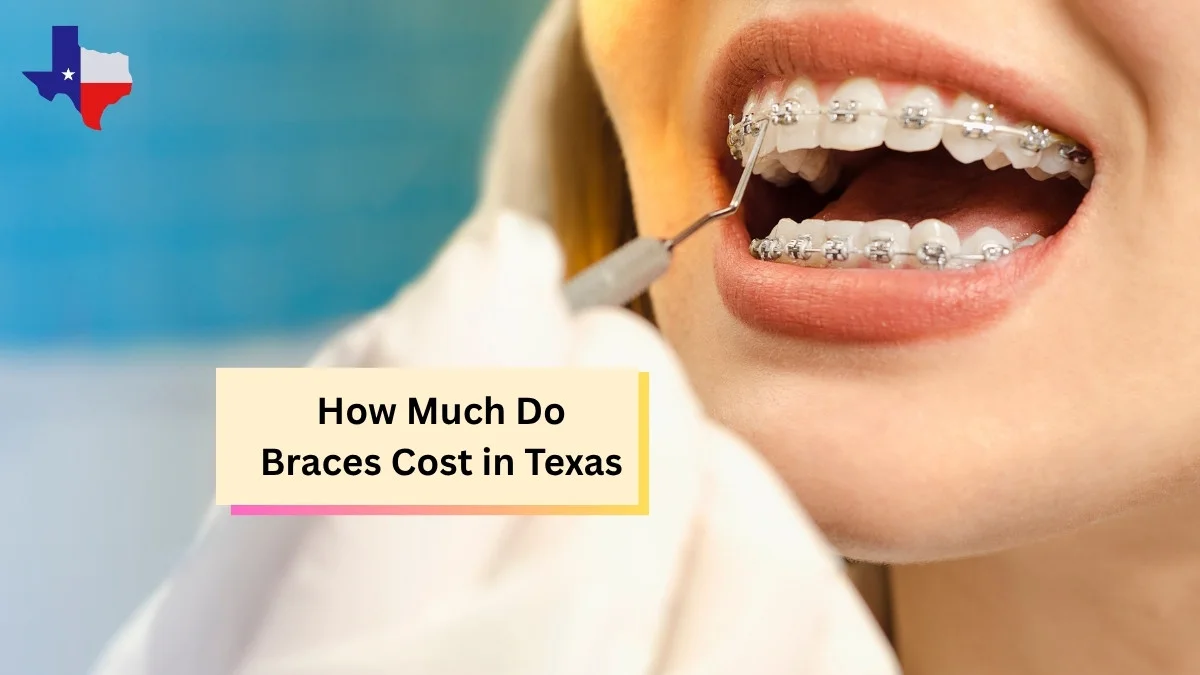
If you are trying to figure out how much do braces cost in Texas, the honest answer is: it depends on several factors, and the range is wide. Costs vary by braces type, your city, the orthodontist’s experience, and how complex your case is. This article breaks down real price ranges by type, compares costs across major Texas cities, explains what drives the price up or down, and covers payment options that make treatment more affordable.
All figures reflect current Texas market rates based on publicly available orthodontic pricing data and TPWD, American Association of Orthodontists, and dental industry sources.
What Is the Average Cost of Braces in Texas?
The average cost for a full course of orthodontic treatment in Texas falls between $3,000 and $7,000 for most patients. That average covers the full treatment period, which typically runs 18 months to 3 years depending on case complexity.
How much do braces cost in Texas at a basic level:
- Metal braces: $3,000 to $5,000
- Ceramic braces: $4,000 to $6,000
- Clear aligners (Invisalign): $4,000 to $8,000
- Self-ligating braces: $3,500 to $5,500
- Lingual braces: $8,000 to $10,000
These are full-treatment totals, not monthly fees. Retainers after treatment add another $150 to $600 depending on type.
Also Check: How Much Is a No Insurance Ticket in Texas
Braces Cost in Texas by Type
Braces in Texas cost between $3,000 and $8,000 depending on the type. Metal braces average $3,000 to $5,000. Ceramic braces run $4,000 to $6,000. Invisalign costs $4,000 to $8,000. Lingual braces are the most expensive at $8,000 to $10,000. Insurance and Medicaid can reduce these costs significantly.
1. Traditional Metal Braces
Metal braces are the most affordable and most common option. They use stainless steel brackets bonded to each tooth and connected by a metal wire that the orthodontist adjusts over time.
Average cost in Texas: $3,000 to $5,000
Metal braces work for nearly every case, from mild crowding to severe bite problems. They require monthly adjustment appointments, which are included in the total treatment cost at most Texas orthodontic offices.
Pros:
- Lowest cost option
- Work on all case types
- Highly predictable results
Cons:
- Visible on teeth
- Food restrictions apply
- Require consistent oral hygiene
2. Ceramic Braces
Ceramic braces work the same way as metal braces but use tooth-colored or clear brackets. They are less visible but not completely invisible.
Average cost in Texas: $4,000 to $6,000
The higher cost reflects the material. Ceramic brackets cost more to manufacture and are more fragile than metal, which can add treatment time if a bracket breaks. They are popular with adults who want a less noticeable option but do not want to pay Invisalign prices.
Pros:
- Less visible than metal
- Effective for most case types
- Similar treatment timeline to metal braces
Cons:
- More expensive than metal
- Can stain with coffee, tea, or certain foods
- Slightly more fragile
3. Clear Aligners (Invisalign and Alternatives)
Clear aligners are removable plastic trays worn over the teeth. Invisalign is the most recognized brand, but alternatives like ClearCorrect, Byte, and SmileDirectClub exist at various price points.
Average cost in Texas:
- Invisalign Full: $4,500 to $8,000
- Invisalign Lite (minor cases): $2,500 to $4,500
- ClearCorrect: $3,000 to $5,000
- At-home aligner brands (Byte, etc.): $1,500 to $2,500 (but these lack in-person orthodontic oversight)
The American Association of Orthodontists advises against at-home aligner companies for complex cases. If you have significant bite issues, crowding, or skeletal problems, in-office treatment with a licensed orthodontist is the appropriate path.
Pros:
- Removable for eating and brushing
- Nearly invisible
- No food restrictions
Cons:
- Higher cost than metal braces
- Requires patient discipline to wear 20 to 22 hours per day
- Not ideal for severe cases
4. Self-Ligating Braces
Self-ligating braces use a built-in clip mechanism instead of elastic ties to hold the wire. Brands like Damon are common examples. Some orthodontists claim they reduce friction and appointment frequency.
Average cost in Texas: $3,500 to $5,500
The clinical evidence on whether self-ligating braces produce faster results than traditional metal braces is mixed. Many orthodontists in Texas offer them as a mid-tier option between standard metal and ceramic.
5. Lingual Braces
Lingual braces attach to the back (tongue side) of the teeth, making them completely invisible from the front. They are custom-made for each patient.
Average cost in Texas: $8,000 to $10,000
Not all orthodontists in Texas offer lingual braces. They require specialized training and take longer to adjust. They are the most expensive fixed appliance option and are typically chosen by adults with professional or aesthetic reasons to avoid visible braces.
How Much Do Braces Cost in Texas by City?
Location within Texas affects price. Urban areas with higher costs of living tend to have higher orthodontic fees. Here is a comparison of average metal braces costs by major Texas city:
| City | Metal Braces (Avg.) | Invisalign (Avg.) | Notes |
|---|---|---|---|
| Houston | $3,500 to $5,500 | $5,000 to $8,000 | High provider density; shop around |
| Dallas/Fort Worth | $3,500 to $5,500 | $4,500 to $7,500 | Competitive market; many discount options |
| Austin | $4,000 to $6,000 | $5,000 to $8,000 | Higher cost of living reflects in fees |
| San Antonio | $3,000 to $5,000 | $4,000 to $7,000 | Generally more affordable than Austin |
| El Paso | $2,800 to $4,500 | $3,500 to $6,000 | Lower overall cost of living |
| Lubbock | $2,800 to $4,500 | $3,500 to $6,000 | Smaller market; competitive pricing |
| McAllen | $2,500 to $4,000 | $3,000 to $5,500 | Most affordable region in the state |
Getting multiple consultations in your city is the most effective way to find accurate pricing. Most Texas orthodontists offer free initial consultations.
Also Check: How Much Taxes Deducted From Paycheck Texas
What Factors Affect the Cost of Braces in Texas?
How much do braces cost in Texas for your specific case depends on several variables:
1. Case Complexity Simple crowding or spacing costs less to treat than severe overbites, underbites, crossbites, or cases involving jaw alignment issues. More complex cases require longer treatment and more appointments.
2. Treatment Duration Longer treatment means more adjustment visits. A 12-month case costs less than a 30-month case even with the same bracket type.
3. Orthodontist Experience and Credentials Board-certified orthodontists (American Board of Orthodontics) typically charge more than general dentists who offer orthodontic treatment. For complex cases, paying more for a specialist is often the right call.
4. Geographic Location As shown in the city table above, Austin and Houston tend to cost more than El Paso or McAllen for the same treatment.
5. Practice Type Corporate orthodontic chains like Brident, Risas, and Sonrisa often offer lower base prices but may have less flexibility on payment terms. Private practices sometimes offer more personalized payment plans.
6. Retainers and Additional Appliances Some cases require palate expanders, headgear, or other appliances before braces. These add $500 to $2,000 to the total cost. Retainers after treatment are almost always an additional charge.
Does Dental Insurance Cover Braces in Texas?
Many Texas dental insurance plans include an orthodontic benefit, but coverage has limits. Here is how it typically works:
- Most plans cover orthodontic treatment only for patients under 18 (some cover adults)
- Coverage is usually a lifetime maximum, not an annual benefit
- Common lifetime orthodontic maximums: $1,000 to $2,500
- Insurance covers a percentage (often 50%) up to that maximum
Example: If your plan has a $1,500 lifetime orthodontic maximum and braces cost $5,000, your insurer pays $1,500 and you pay $3,500 out of pocket.
Texas children enrolled in Medicaid (STAR) may qualify for orthodontic coverage if the case meets medical necessity criteria. Medicaid in Texas covers braces for children with severe handicapping malocclusions, assessed using a standardized scoring system. Cosmetic cases (mild crowding) generally do not qualify.
CHIP (Children’s Health Insurance Program) in Texas includes limited orthodontic benefits. Eligibility depends on income and case severity.
How to Pay for Braces in Texas: Payment Options
How much do braces cost in Texas matters less if you have a workable payment plan. Most Texas orthodontists offer several financing options:
1. In-Office Payment Plans The majority of Texas orthodontic practices offer interest-free monthly payment plans spread across the treatment period. A $5,000 treatment over 24 months equals about $208 per month before any down payment.
2. CareCredit and Alphaeon Credit These are healthcare credit cards accepted at many orthodontic offices. CareCredit offers promotional interest-free periods of 6, 12, 18, or 24 months. If you pay the balance before the promotional period ends, you pay no interest. If not, deferred interest applies retroactively.
3. Health Savings Accounts (HSA) and Flexible Spending Accounts (FSA) Orthodontic treatment qualifies as a medical expense. You can use HSA or FSA funds to pay for braces tax-free, which effectively reduces your cost by your marginal tax rate.
4. Orthodontic Schools Texas has several dental and orthodontic schools where supervised residents provide treatment at significantly reduced rates:
- UT Health San Antonio School of Dentistry: Offers orthodontic treatment at reduced rates
- Texas A&M College of Dentistry (Dallas): Accepts patients for orthodontic treatment at lower fees
- UT Health Houston School of Dentistry: Treats patients under faculty supervision
Treatment at these schools takes longer due to the educational setting, but savings can be 30% to 50% compared to private practice rates.
5. Negotiating a Cash Discount Many private orthodontic practices in Texas offer a 3% to 10% discount for paying in full upfront. Ask directly. It is standard practice and most offices expect the question.
How Much Do Braces Cost in Texas for Adults vs. Children?
Braces costs in Texas are similar for adults and children in terms of bracket and aligner pricing. The differences come from:
Treatment Complexity: Adult bone is denser and less responsive to tooth movement than a growing child’s jaw. Some adult cases take longer, which can increase total cost.
Insurance Coverage: Most Texas dental plans with orthodontic benefits limit adult coverage. Children are more likely to have insurance that pays toward treatment.
Case Type: Adults are more likely to choose ceramic braces or Invisalign for aesthetic reasons, which pushes the cost higher.
Typical adult braces cost in Texas: $4,000 to $7,500 depending on type and case complexity.
Typical children/teen braces cost in Texas: $3,000 to $6,000, often partially offset by insurance.
What Is Included in the Braces Cost?
When an orthodontist quotes you a total treatment fee, confirm what it includes. Standard inclusions at most Texas practices:
- Initial consultation and diagnostic records (X-rays, photos, molds or digital scans)
- All adjustment appointments throughout treatment
- Replacement of broken brackets (some practices limit this)
- Band removal at end of treatment
- One set of retainers (not always included; ask specifically)
Items that are often NOT included:
- Additional retainers if lost or broken
- Palate expanders or other pre-treatment appliances
- Emergency visits for broken wires after hours
- Teeth whitening after treatment
Ask for a written treatment contract that specifies exactly what the fee covers before you sign anything.
Red Flags to Watch for When Shopping for Braces in Texas
Not all orthodontic deals are equal. Watch for these issues:
- Unusually low quotes without explanation: A $1,500 quote for full metal braces in Austin likely means a limited treatment scope, a non-specialist provider, or hidden fees later.
- Pressure to sign at the first visit: Reputable Texas orthodontists expect you to shop around. Take time to compare at least two or three consultations.
- No written treatment contract: Every Texas orthodontic practice should provide a written agreement specifying treatment scope, total fee, payment terms, and what happens if treatment takes longer than expected.
- General dentist performing complex ortho: For simple spacing issues, a general dentist with orthodontic training may be fine. For bite correction, jaw issues, or complex crowding, an orthodontist with a specialty degree (MS or MSD in orthodontics) is the appropriate choice.
Frequently Asked Questions
How much do braces cost in Texas with insurance?
With insurance, Texas patients typically pay $2,000 to $4,500 out of pocket for braces. Most plans cap orthodontic benefits at $1,000 to $2,500 lifetime. Insurance covers 50% up to that maximum. Total savings depend on your specific plan and treatment cost.
Does Medicaid cover braces for kids in Texas?
Yes, Texas Medicaid covers braces for children who meet medical necessity criteria based on a standardized scoring system for severe malocclusion. Cosmetic or mild cases do not qualify. Parents should request an orthodontic referral through their child’s Medicaid dental provider to start the evaluation process.
How long do braces take in Texas?
Most braces treatments in Texas take 18 to 30 months. Mild cases can finish in 12 to 18 months. Severe bite problems or complex crowding may take 30 to 36 months. Treatment duration directly affects total cost, since more appointments are required for longer cases.
Are braces cheaper in some Texas cities than others?
Yes. McAllen, El Paso, and Lubbock tend to have lower braces costs than Austin and Houston. Cost of living and local market competition both affect pricing. Getting consultations from two or three orthodontists in your city gives you the most accurate local price range for your specific case.
Can adults get braces in Texas, and is the cost different?
Adults can get braces at any age in Texas. Adult costs run slightly higher, averaging $4,000 to $7,500, partly because adults prefer less visible options like ceramic braces or Invisalign. Insurance coverage for adults is more limited than for children. Treatment timelines for adults can also be longer, adding to total cost.
Is Invisalign worth the extra cost compared to metal braces in Texas?
Invisalign costs $1,000 to $3,000 more than metal braces in Texas for comparable cases. It is worth the extra cost if removing the appliance to eat and brush matters to you, or if visibility is a concern. For complex bite problems, metal braces often produce more predictable results. Ask your orthodontist which is appropriate for your specific case.
Conclusion
How much do braces cost in Texas comes down to braces type, case complexity, city, and payment method. Metal braces in the $3,000 to $5,000 range remain the most affordable fixed option. Invisalign runs $4,500 to $8,000 for full treatment. Insurance, HSA funds, and in-office payment plans can make any of these options more manageable. Get at least two consultations, ask for a written breakdown of what is included, and confirm your insurance benefits before committing to a provider.
The right orthodontic choice is the one that fits your case, your schedule, and your budget without surprises partway through treatment.




Leave a Comment