
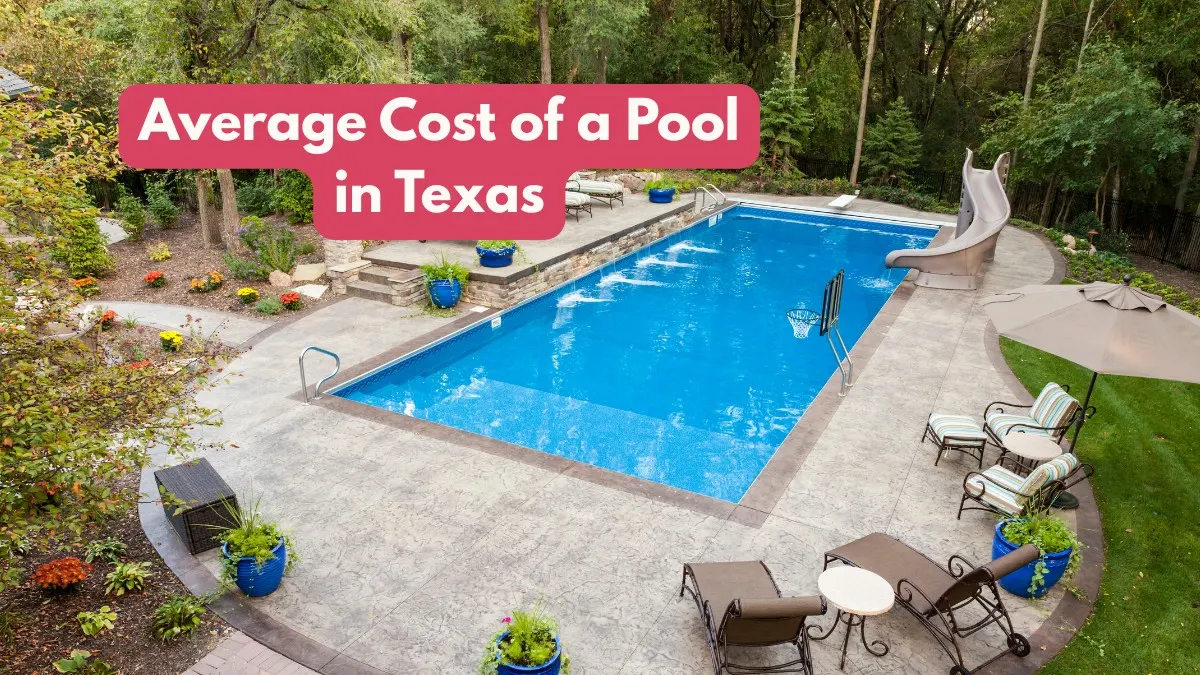
Building a pool in Texas is one of the most common home improvement projects in the state. The long swimming season, hot summers, and strong backyard culture make it a practical investment for many homeowners. The average cost of a pool in Texas depends on pool type, size, materials, site conditions, and add-ons. This article breaks down every cost category with real numbers, explains what drives price differences across Texas markets, and helps you understand what you will actually spend from dig to first swim.
Must Read: Average Cost of Foundation Repair in Texas
The average cost of a pool in Texas ranges from $35,000 to $65,000 for a standard inground pool. Fiberglass pools start around $45,000. Vinyl liner pools run $35,000 to $55,000. Concrete gunite pools average $50,000 to $100,000+. Above-ground pools cost $1,500 to $15,000 installed.
Why Pool Costs in Texas Differ From Other States
Texas has several characteristics that affect pool construction costs specifically.
Long build season: Texas contractors build pools year-round in most of the state. This creates a competitive market with more builders than in northern states, which can hold prices down in some markets.
Expansive clay soil: The same soil that causes foundation problems in Texas affects pool construction. Clay soil requires more excavation planning, affects backfill procedures, and can cause pool shell movement if drainage is not managed correctly. This adds cost in some Texas regions.
High demand: Pool demand surged significantly after 2020 and has remained elevated. In competitive Texas markets like Austin, Dallas, and Houston, lead times for reputable builders run six to twelve months and backlogs keep prices firm.
Local permit and inspection requirements: Texas pool permit fees and inspection requirements vary by municipality. Some cities require engineer-stamped structural drawings, which add cost. Others have simpler processes.
Average Cost of a Pool in Texas by Pool Type
The average cost of a pool in Texas varies most dramatically by the type of pool you choose. Each type has a different construction process, material cost, longevity profile, and maintenance requirement.
Concrete Gunite Pools
Gunite pools are the most customisable and most durable option. Concrete is sprayed pneumatically onto a steel rebar framework, creating a shell that can be shaped into almost any form. The interior surface is then finished with plaster, pebble aggregate, or tile.
Average cost of a concrete gunite pool in Texas: $50,000 to $100,000+
Standard gunite pools in the $50,000 to $65,000 range are rectangular or simple freeform shapes with basic plaster interiors and standard equipment. Custom shapes, raised walls, negative edges, attached spas, and premium interior finishes push costs toward and above $100,000.
Gunite pools last 25 to 50 years or more with proper maintenance. The interior surface requires replastering every 10 to 15 years at a cost of $5,000 to $15,000 depending on the finish type.
Best for: Homeowners who want full customisation, complex shapes, or attached water features.
Fiberglass Pools
Fiberglass pools are pre-manufactured shells delivered to the site and set into an excavated hole. The shell is a single piece manufactured off-site in a factory. Installation is faster than gunite, typically two to four weeks versus eight to sixteen weeks for gunite.
Average cost of a fiberglass pool in Texas: $45,000 to $85,000 installed
The pool shell itself costs $20,000 to $40,000. Installation, plumbing, electrical, decking, and permits bring the total to the ranges above. Fiberglass shells have width limitations because they must be transported by truck, with most shells maxing out at 16 feet wide and 40 feet long.
Fiberglass surfaces are smooth and algae-resistant, reducing chemical use. The shell carries a manufacturer warranty of 10 years to lifetime on the structure.
Best for: Homeowners who want faster installation, lower ongoing chemical costs, and a smooth surface finish.
Vinyl Liner Pools
Vinyl liner pools have a steel, aluminum, or polymer wall structure with a custom vinyl liner fitted inside as the water-holding surface. They are common in northern states but less prevalent in Texas than gunite or fiberglass.
Average cost of a vinyl liner pool in Texas: $35,000 to $55,000
The lower upfront cost comes with a recurring expense: vinyl liners in Texas typically last 7 to 12 years before needing replacement, at a cost of $4,000 to $10,000 per liner replacement. Sharp objects and pool toys can puncture liners, requiring patch repairs.
Best for: Homeowners with tighter upfront budgets who plan to replace the liner when needed.
Above-Ground Pools
Above-ground pools are the lowest-cost option and do not require excavation. They range from basic inflatable models to semi-permanent steel-frame structures.
Average cost of an above-ground pool in Texas: $1,500 to $15,000 installed
Basic steel-frame above-ground pools with pump and filter run $1,500 to $5,000. Larger resin-frame pools with decking, fencing, and upgraded filtration reach $10,000 to $15,000. Above-ground pools do not add the same property value as inground pools and have shorter lifespans of 7 to 15 years.
Best for: Renters, temporary situations, or homeowners who want a lower commitment cost.
Also Read: Cost of Uncontested Divorce in Texas
Full Cost Breakdown: Inground Pool in Texas
The average cost of a pool in Texas involves more than the pool shell and excavation. Here is a complete cost breakdown for a standard inground pool project.
| Cost Component | Low Estimate | High Estimate |
|---|---|---|
| Excavation | $1,500 | $5,000 |
| Pool shell / gunite or fiberglass | $20,000 | $55,000 |
| Plumbing | $3,000 | $8,000 |
| Electrical | $2,500 | $6,000 |
| Pool equipment (pump, filter, heater) | $3,000 | $12,000 |
| Interior finish (plaster, pebble, tile) | $3,000 | $15,000 |
| Coping (pool edge material) | $2,000 | $8,000 |
| Decking (concrete, travertine, pavers) | $5,000 | $25,000 |
| Fencing (required by Texas law) | $2,000 | $8,000 |
| Permits and inspections | $500 | $2,500 |
| Landscaping adjustment | $1,000 | $5,000 |
| Pool cleaner (automatic) | $600 | $2,500 |
| Total estimated range | $45,000 | $152,000 |
This table reflects a complete turnkey pool project. The wide range reflects the difference between a basic rectangular pool with concrete decking and a custom freeform pool with travertine decking, LED lighting, and a water feature.
Average Cost of a Pool in Texas by City
The average cost of a pool in Texas varies by local labor rates, permit costs, and market demand.
| Texas City | Average Inground Pool Cost | Notes |
|---|---|---|
| Austin | $55,000 to $95,000 | High demand, limestone rock adds excavation cost |
| Dallas / Fort Worth | $50,000 to $90,000 | Competitive market, clay soil factors in |
| Houston | $48,000 to $85,000 | High humidity affects material choices |
| San Antonio | $45,000 to $80,000 | Caliche soil layer affects excavation |
| Plano / Frisco | $55,000 to $100,000 | Premium suburb market, larger builds |
| El Paso | $38,000 to $70,000 | Smaller market, lower labor costs |
| Lubbock | $35,000 to $65,000 | Less demand, more competitive pricing |
| Corpus Christi | $42,000 to $75,000 | Coastal humidity, salt-resistant materials recommended |
Austin sits at the higher end of the average cost of a pool in Texas because limestone bedrock is common in many areas, requiring blasting or specialised excavation equipment that adds $3,000 to $10,000 to the dig cost.
Pool Size and Shape: How They Affect Cost
Pool size directly affects the average cost of a pool in Texas. Larger pools require more excavation, more gunite or a larger fiberglass shell, more plumbing runs, more interior finish material, and larger equipment.
| Pool Size | Approximate Gunite Cost (Shell and Finish Only) |
|---|---|
| Small (12 x 24 ft, 288 sq ft) | $28,000 to $45,000 |
| Medium (16 x 32 ft, 512 sq ft) | $40,000 to $65,000 |
| Large (20 x 40 ft, 800 sq ft) | $55,000 to $90,000 |
| Extra large (custom, 1,000+ sq ft) | $80,000 to $150,000+ |
Freeform shapes cost more than rectangular pools of the same square footage because irregular curves require more custom formwork and gunite work. A freeform pool adds 10 to 20 percent to the shell cost compared to a rectangle of the same size.
Popular Pool Add-Ons and Their Costs in Texas
Most Texas homeowners add features beyond the basic pool shell. These add-ons increase the average cost of a pool in Texas significantly and are where budgets most commonly exceed initial expectations.
Attached Spa
An attached spa (hot tub built into the pool structure) is one of the most requested add-ons in Texas. Spas use the same equipment as the pool with a dedicated heater and jet pump.
Cost: $8,000 to $20,000 added to pool cost
A freestanding above-ground spa costs $3,000 to $10,000 separately but does not integrate with the pool aesthetically.
Pool Heater
Texas pools are usable most of the year without heating, but a heater extends the season through cooler months and allows year-round swimming in most Texas cities.
- Gas heater: $1,500 to $3,500 installed
- Heat pump: $3,000 to $6,000 installed
- Solar heating system: $3,000 to $7,000 installed
Gas heaters warm the pool fastest. Heat pumps are more energy-efficient for regular use. Solar systems have the highest upfront cost but the lowest operating cost.
Water Features
Waterfalls, deck jets, bubblers, and sheer descent features add visual appeal and the sound of moving water.
- Basic waterfall (rock or concrete): $2,000 to $8,000
- Deck jets (per jet): $300 to $600
- Sheer descent waterfall: $1,500 to $4,000
- Grotto with waterfall: $10,000 to $25,000
LED Pool Lighting
Standard pool lighting costs $700 to $1,500 for a basic setup. Color-changing LED systems with app control run $2,000 to $5,000. Lighting is typically included in full-service quotes but confirm this before signing.
Tanning Ledge (Baja Shelf)
A tanning ledge is a shallow shelf (6 to 12 inches deep) built into the pool where adults can lounge in water or young children can play safely.
Cost: $1,500 to $4,000 added to pool cost
Pool Decking Options and Costs
Decking surrounds the pool and represents one of the largest variable costs in a pool project. Texas homeowners choose from several materials.
| Decking Material | Cost Per Square Foot | 500 sq ft Deck Total |
|---|---|---|
| Brushed concrete | $6 to $12 | $3,000 to $6,000 |
| Stamped concrete | $12 to $22 | $6,000 to $11,000 |
| Travertine pavers | $18 to $35 | $9,000 to $17,500 |
| Brick pavers | $15 to $28 | $7,500 to $14,000 |
| Cool deck coating | $3 to $6 | $1,500 to $3,000 |
Travertine is popular in Texas because it stays cooler underfoot than concrete in direct sunlight, which matters significantly during Texas summers.
Texas Pool Fencing Requirements
Texas law requires barrier fencing around residential pools under the Texas Health and Safety Code Chapter 757. Specific requirements include:
- Fence must be at least 48 inches tall
- Gates must be self-closing and self-latching
- Latch must be on the pool side of the gate, out of reach of young children
- Fence must prevent children from climbing under or through it
- Some municipalities have additional local requirements beyond state minimums
Fencing cost: $2,000 to $8,000 depending on material (aluminum, wrought iron, wood, or glass) and linear footage required.
Glass panel fencing runs $150 to $250 per linear foot and significantly increases cost but provides unobstructed views of the pool.
Annual Operating Costs for a Texas Pool
The average cost of a pool in Texas does not stop at construction. Ongoing annual operating costs are a real part of pool ownership.
| Operating Cost | Annual Estimate |
|---|---|
| Chemicals | $600 to $1,200 |
| Electricity (pump and equipment) | $800 to $2,400 |
| Gas (heater, if used) | $600 to $2,000 |
| Professional cleaning service (weekly) | $1,800 to $3,600 |
| Equipment maintenance and repairs | $300 to $800 |
| Total annual operating cost | $4,100 to $10,000 |
Variable speed pumps reduce electricity costs significantly. Pool owners who handle their own chemical management and cleaning reduce annual costs to $1,500 to $3,000 but invest time weekly in maintenance.
Does a Pool Add Value to a Texas Home
The average cost of a pool in Texas is a large investment. Understanding its effect on property value helps homeowners make an informed decision.
According to the National Association of Realtors and various appraisal industry sources, an inground pool adds 5 to 8 percent to a home’s value on average. In Texas markets where pools are common and expected at certain price points, the value addition can be higher. In entry-level markets, a pool adds less value because buyer expectations differ.
The key factor is neighbourhood context. In an area where 60 percent of homes have pools, a home without one sells at a relative disadvantage. In a neighbourhood where pools are rare, the value addition is harder to realise at resale.
Pools also affect time on market. In Texas real estate markets, homes with pools in warmer months often attract more buyers and sell faster than comparable homes without pools.
How to Get Accurate Pool Quotes in Texas
Getting accurate pricing requires approaching the process systematically.
- Get a minimum of three written quotes. Pool pricing varies significantly between builders. Three quotes give you a realistic market range for your specific project.
- Compare quotes line by line. Ensure each quote includes the same scope: excavation, shell, plumbing, electrical, equipment, interior finish, coping, and decking. Quotes that look cheaper often exclude components that others include.
- Verify contractor licensing. Texas pool builders should be registered with the Texas Department of Licensing and Regulation (TDLR) under the Swimming Pool and Spa contractor classification. Verify registration at the TDLR website before signing.
- Ask about warranty terms. What does the structural warranty cover and for how long? What about equipment warranties? Is the warranty transferable?
- Ask for a construction timeline in writing. Get a start date and estimated completion date in the contract. Delays are common in high-demand periods but unreasonable delays should be addressed contractually.
- Confirm permit handling. Reputable contractors pull all required permits. If a contractor suggests skipping permits to save money, walk away.
Frequently Asked Questions
What is the average cost of a pool in Texas in 2026?
The average cost of a pool in Texas in 2026 ranges from $45,000 to $85,000 for a standard inground pool installed with basic decking and equipment. Concrete gunite pools with premium finishes and add-ons run $80,000 to $150,000. Above-ground pools cost $1,500 to $15,000 installed.
How long does it take to build a pool in Texas?
A fiberglass pool installs in two to four weeks once construction begins. A concrete gunite pool takes eight to sixteen weeks from dig to completion. Permit approval adds two to six weeks before construction starts. In high-demand periods, booking a reputable builder may require a six to twelve month wait.
Does a pool increase home value in Texas?
An inground pool typically adds 5 to 8 percent to a Texas home’s value, though the actual increase depends on neighbourhood, pool condition, and buyer demand in that specific market. In premium Texas suburbs where pools are common at mid to upper price points, the value addition is more reliable than in entry-level markets.
What is the cheapest inground pool option in Texas?
Vinyl liner pools offer the lowest inground pool entry cost in Texas at $35,000 to $55,000 installed. Small fiberglass pool shells start around $45,000 installed for basic models. Concrete gunite is the most expensive inground option but the most customisable and longest-lasting.
How much does pool maintenance cost per year in Texas?
Annual pool maintenance in Texas runs $4,100 to $10,000 including chemicals, electricity, professional cleaning service, and equipment upkeep. Homeowners who handle their own cleaning and chemical management reduce costs to $1,500 to $3,000 per year. Texas’s long swim season means pools run more months per year than in most other states.
Is a pool permit required in Texas?
Yes. Texas law requires permits for inground pool construction in all incorporated municipalities. Permit requirements and fees vary by city, but all permitted work requires inspections at key construction stages. Reputable contractors handle permit applications as part of the project. Building without a permit creates liability and title problems at resale.
Conclusion
The average cost of a pool in Texas ranges from $35,000 for a basic vinyl liner pool to over $150,000 for a custom gunite build with premium features. The pool type, size, decking choice, and add-ons determine where your project lands within that range. Getting multiple quotes from TDLR-licensed contractors, comparing them line by line, and budgeting honestly for annual operating costs gives you the clearest picture of what pool ownership will actually cost before you sign a contract.





Leave a Comment